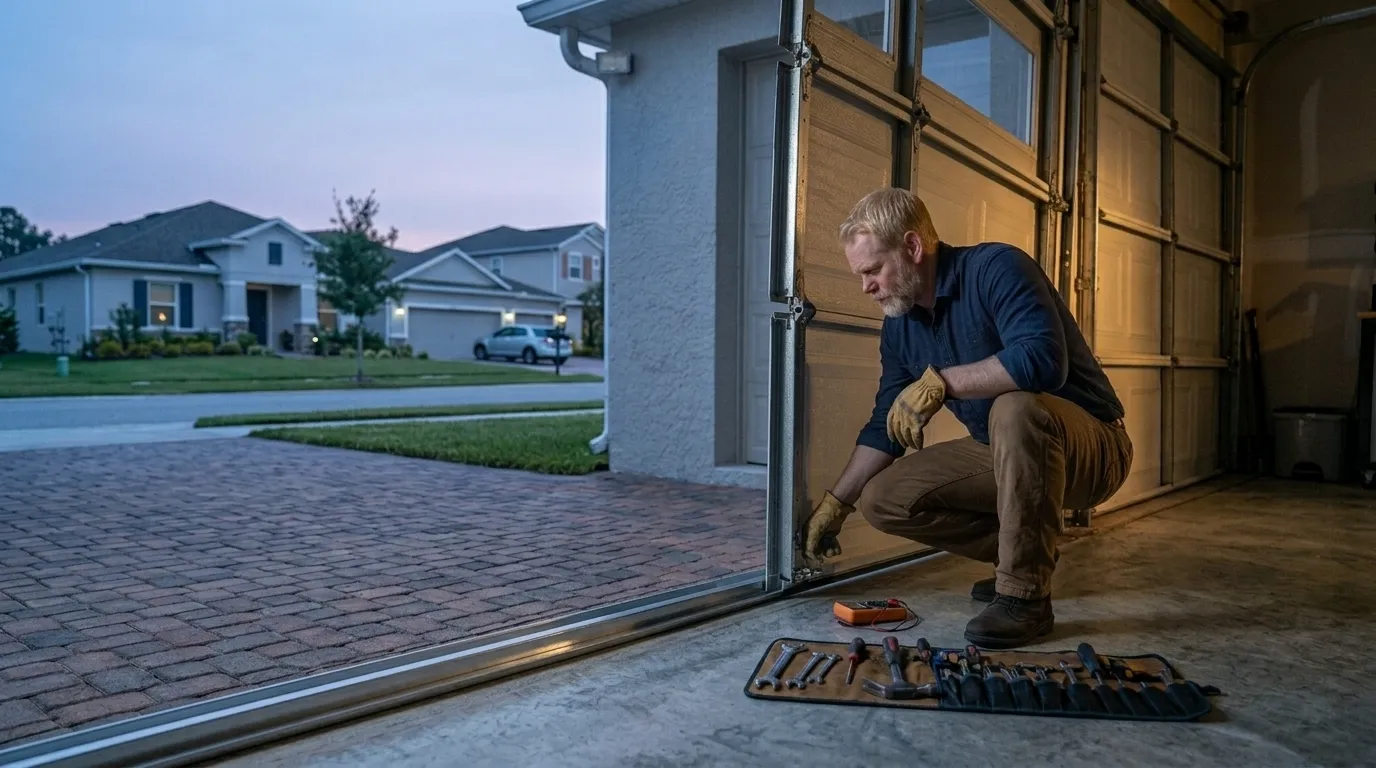
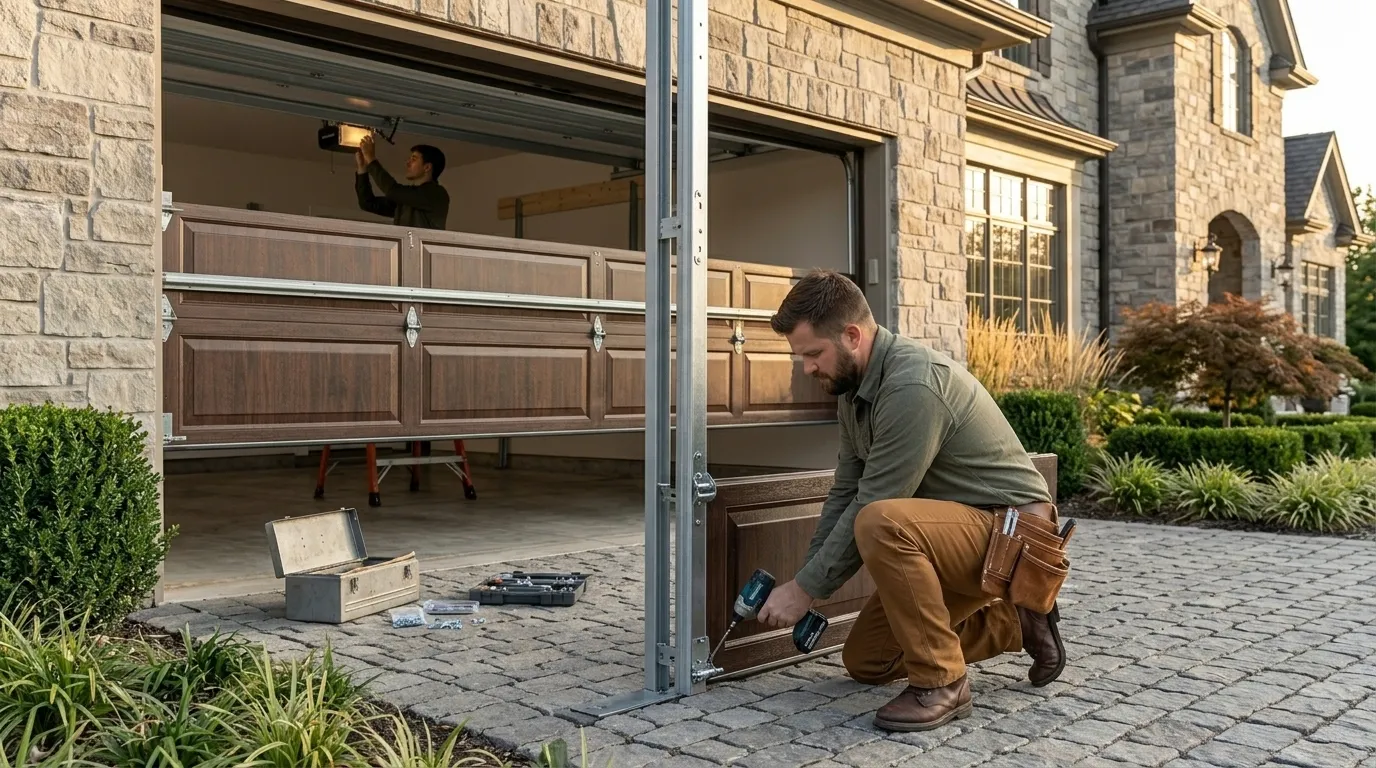
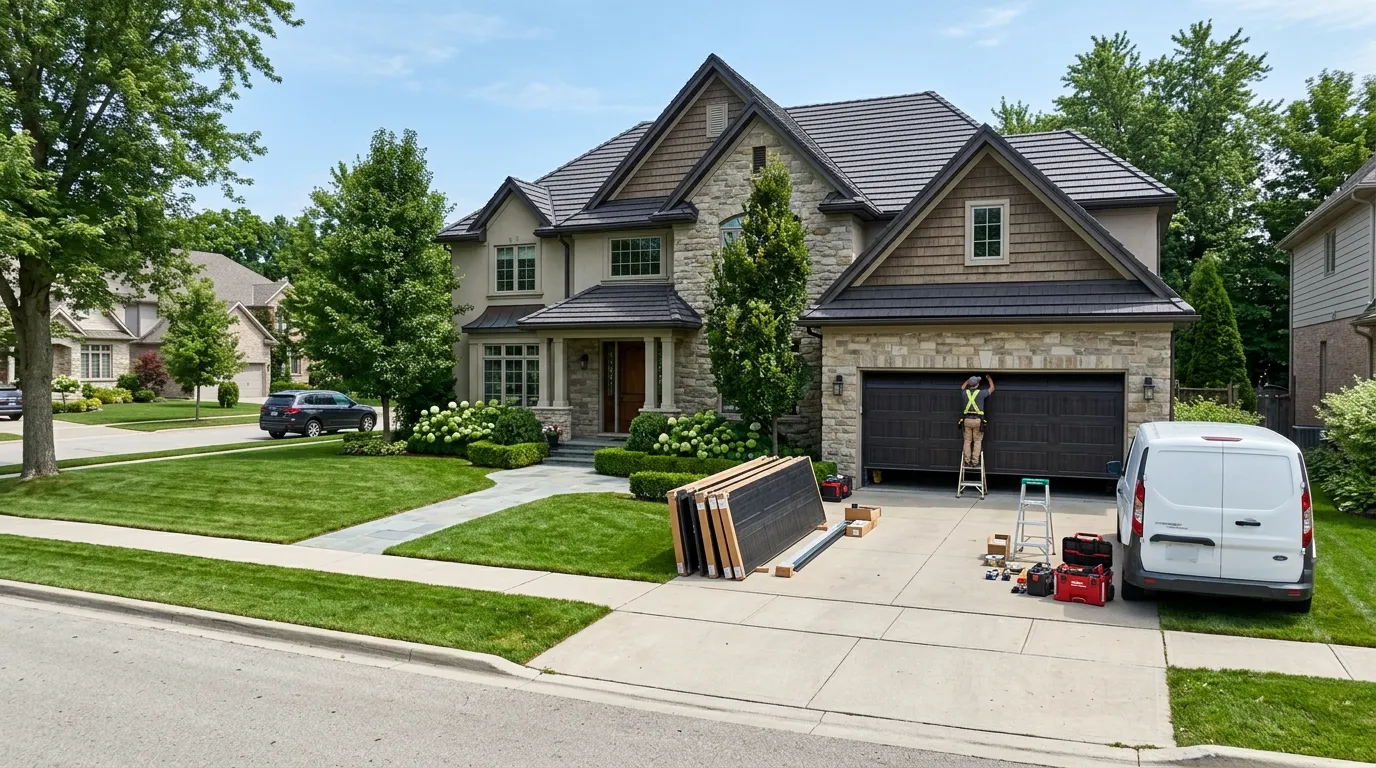
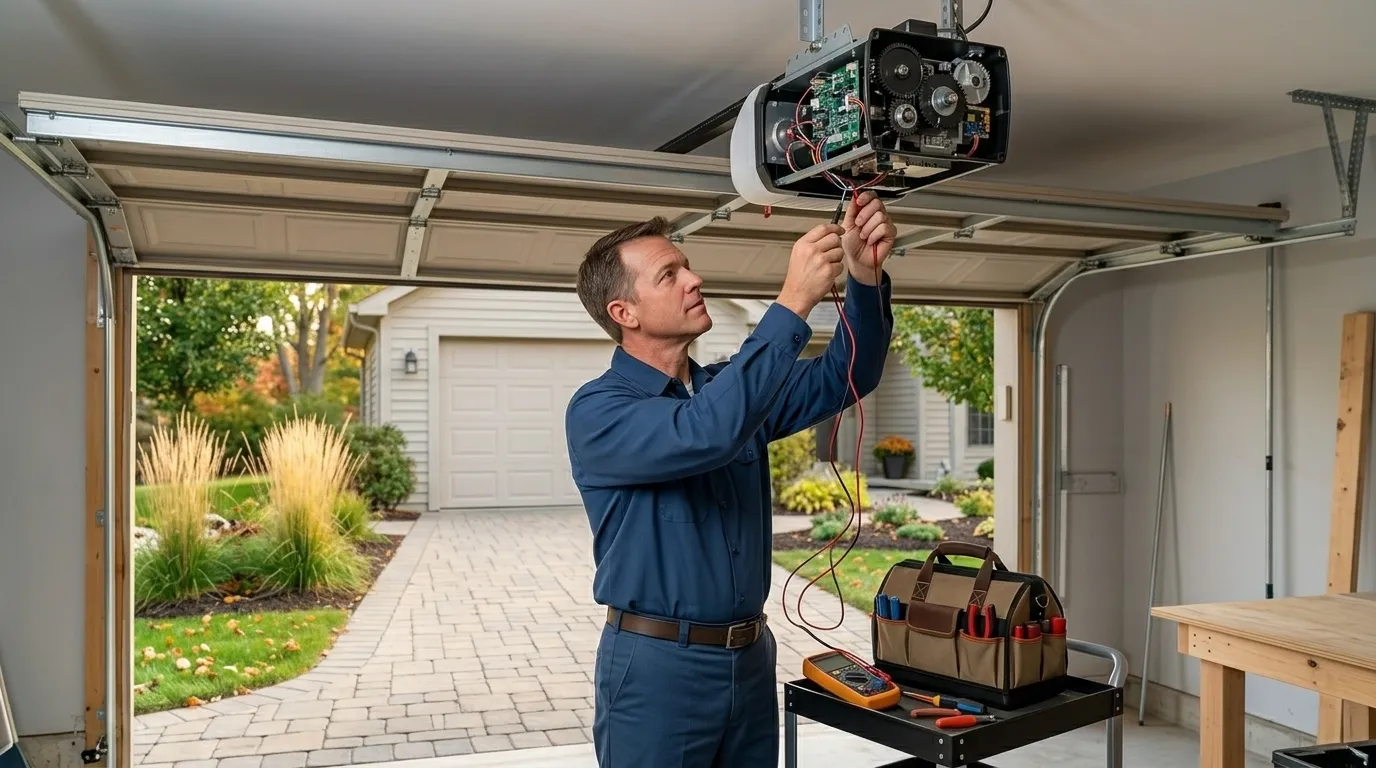
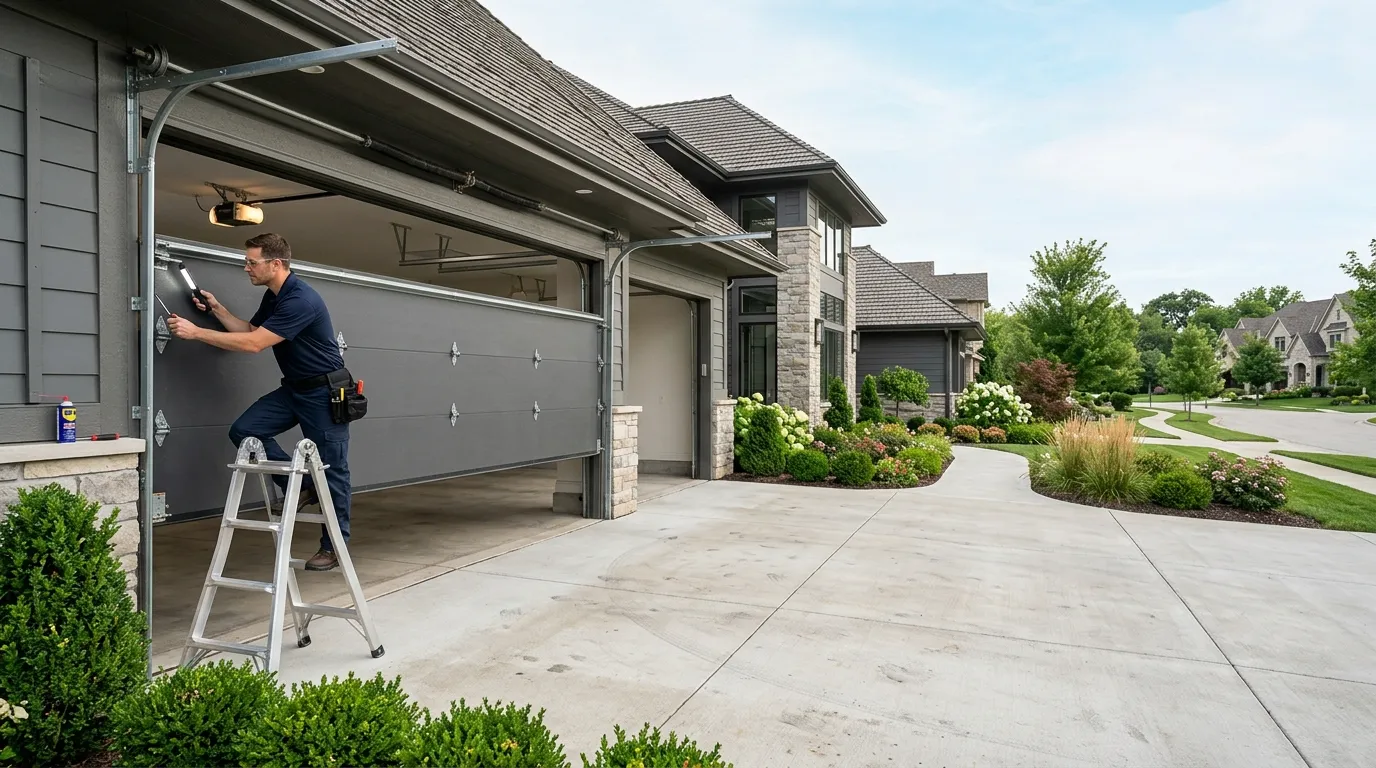
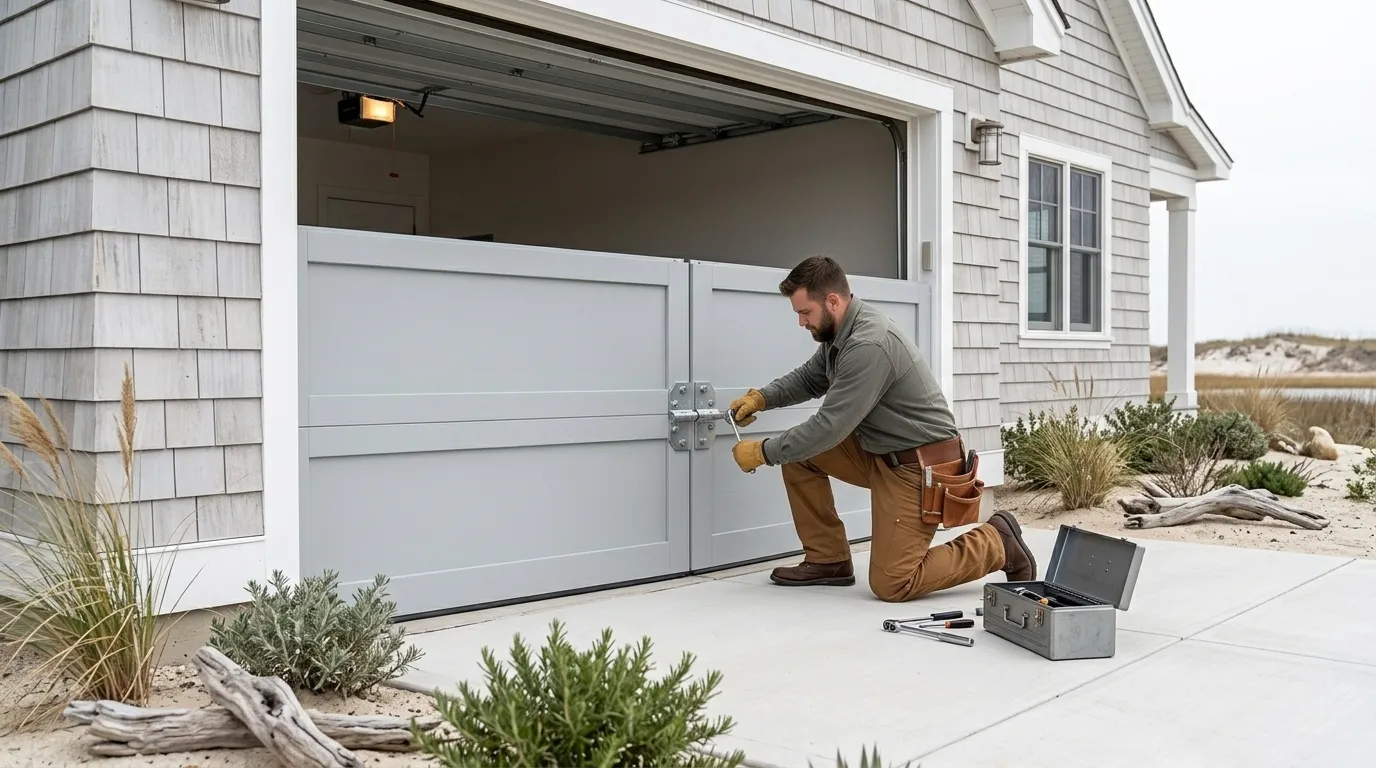
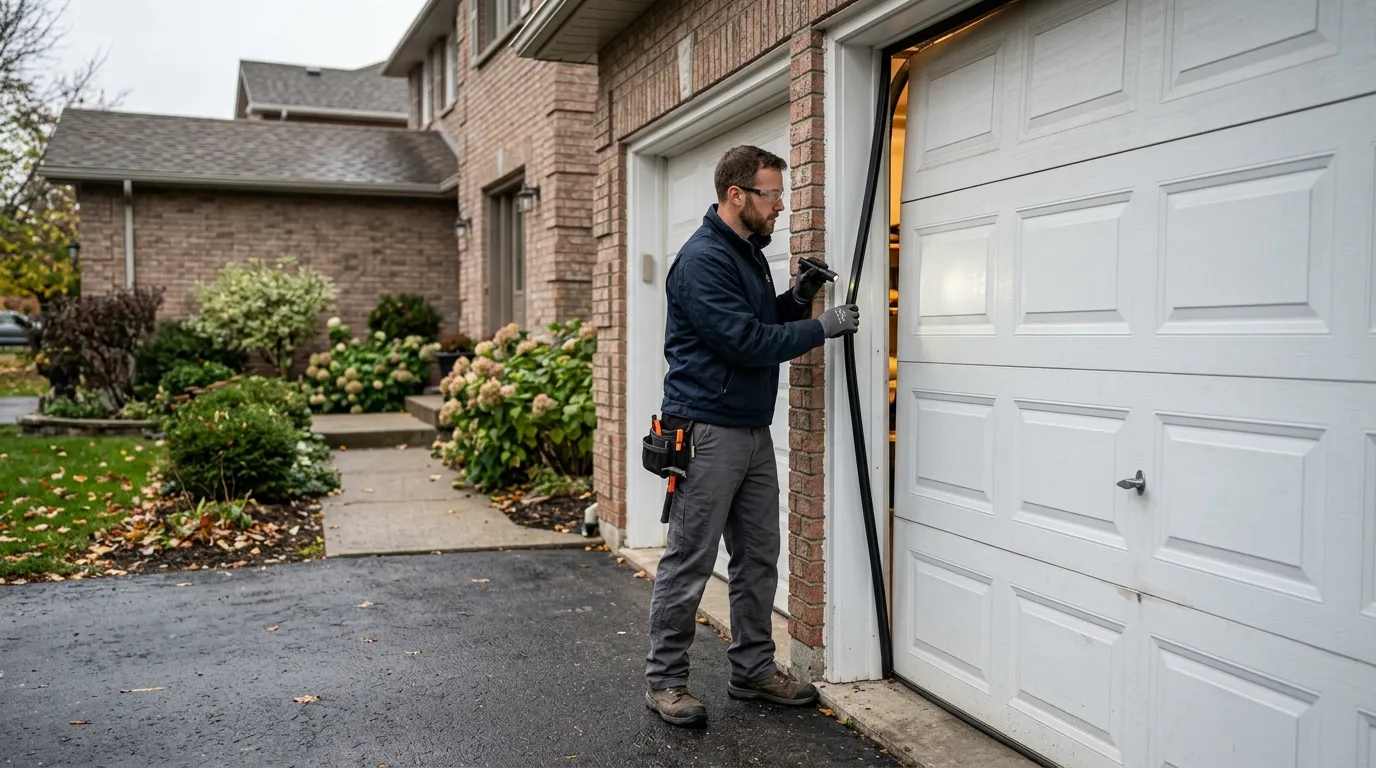
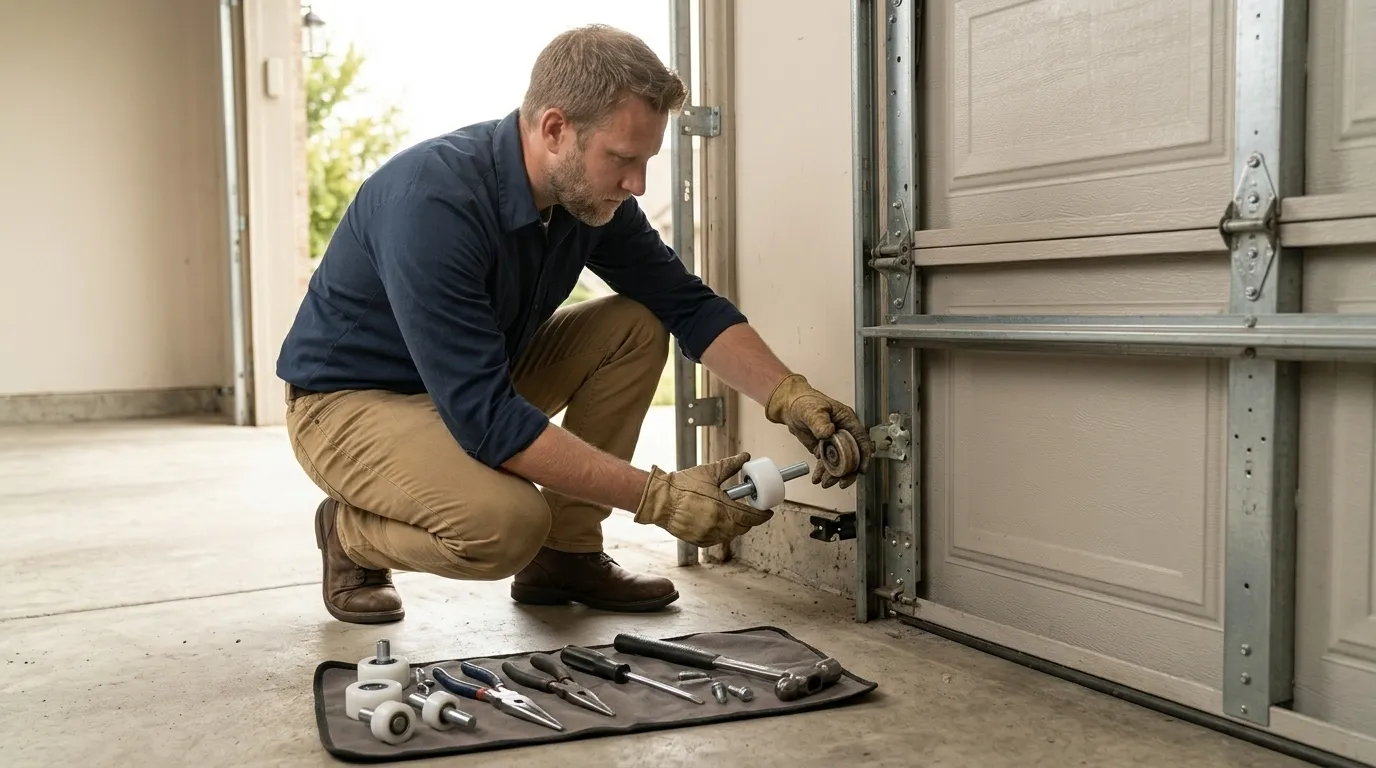
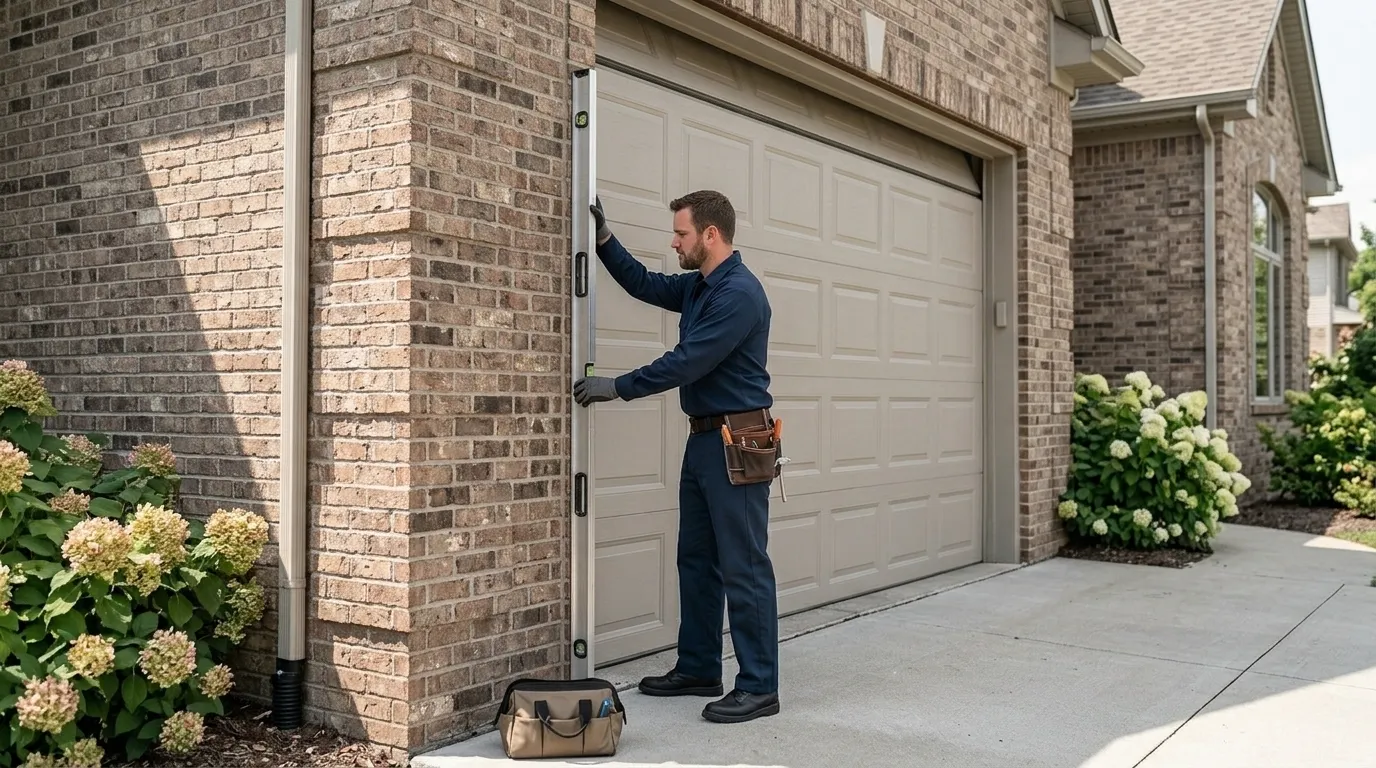
Installing a new opener on a Payson house isn't a plug-and-play job the way it is on newer construction elsewhere. Most of the housing stock across this service area went up between 1979 and 2000, with a median build year around 1984, and that means the header framing, the track mount points, and the door weight itself were all engineered around openers from that era. A tech has to pull the old unit, check whether the existing rail and header bracket can carry a modern chain or belt drive, and in a fair number of cases rebuild the mounting point before the new opener goes up. On a straightforward swap where the header is sound, the job is a few hours: old unit down, new unit up, travel limits and force settings dialed in, safety sensors aligned and tested. On a house where the header has sagged or the old bracket was never rated for today's motor weight, you're adding wood work before the opener even goes on the wall. We won't hang a new opener on a header that can't hold it - that's the one call we'll always make honestly, even if it means a longer job than you expected.
What You Pay
We don't post a flat number here because the honest range depends on what's behind your ceiling: whether you're swapping a working opener for a quieter or stronger one, or replacing a dead unit and rebuilding a weak mount at the same time. A clean swap costs less than a job that needs header reinforcement, new rail, or rewiring because the old opener was on a circuit that doesn't meet current code. What we can tell you without seeing the door is that the extra cost, when there is one, almost always comes from the mounting structure - not the opener itself. Ask for that broken out separately on any quote so you know what you're actually paying for: unit versus carpentry versus electrical.
Why This Fails Locally
This area sits in a cold, moderate climate band, which matters more for openers than most people expect. Garage temperatures swing wide between winter nights and summer afternoons, and that swing works on the gears, the drive belt or chain, and especially the logic board inside the opener housing. Openers built into the housing stock from the 1979-2000 wave were spec'd for the loads and temperature ranges expected at the time, not for thirty-plus years of thermal cycling on the same board and gearing. Add in that most of these homes share the same three general construction eras across the service area, so the same design weak points show up on street after street: worn drive gears, a logic board that's taken one too many cold-to-hot swings, and a header bracket that was fine for a lighter, older-style motor but not for the heavier belt-drive units homeowners want to upgrade to now. It isn't one bad batch of openers - it's the mismatch between decades-old framing and today's motor weight, repeated across a lot of houses built in the same short window.
The Symptom
The pattern we see most often starts small: the opener runs but the door hesitates partway up, or it reverses right before it seats on the floor. Some owners hear a grinding tick from the motor housing that wasn't there six months ago. Others notice the remote works fine some days and not at all on cold mornings - a sign the logic board is struggling with the temperature swing this area gets. None of that means the door itself is broken. It usually means the opener is nearing the end of what its gearing and board can take, especially if the house is one of the many built in that 1979-2000 window on original hardware. If you're hearing any of this, don't wait for full failure - a door that won't close all the way is a security problem, not just an inconvenience.
How it works
From “it’s stuck” to “it’s fixed”
A quick, honest process - no guesswork and no surprises.
1
Tell us what’s wrong
Describe the symptom - won’t open, loud bang, opener runs but the door won’t move.
2
On-site diagnosis
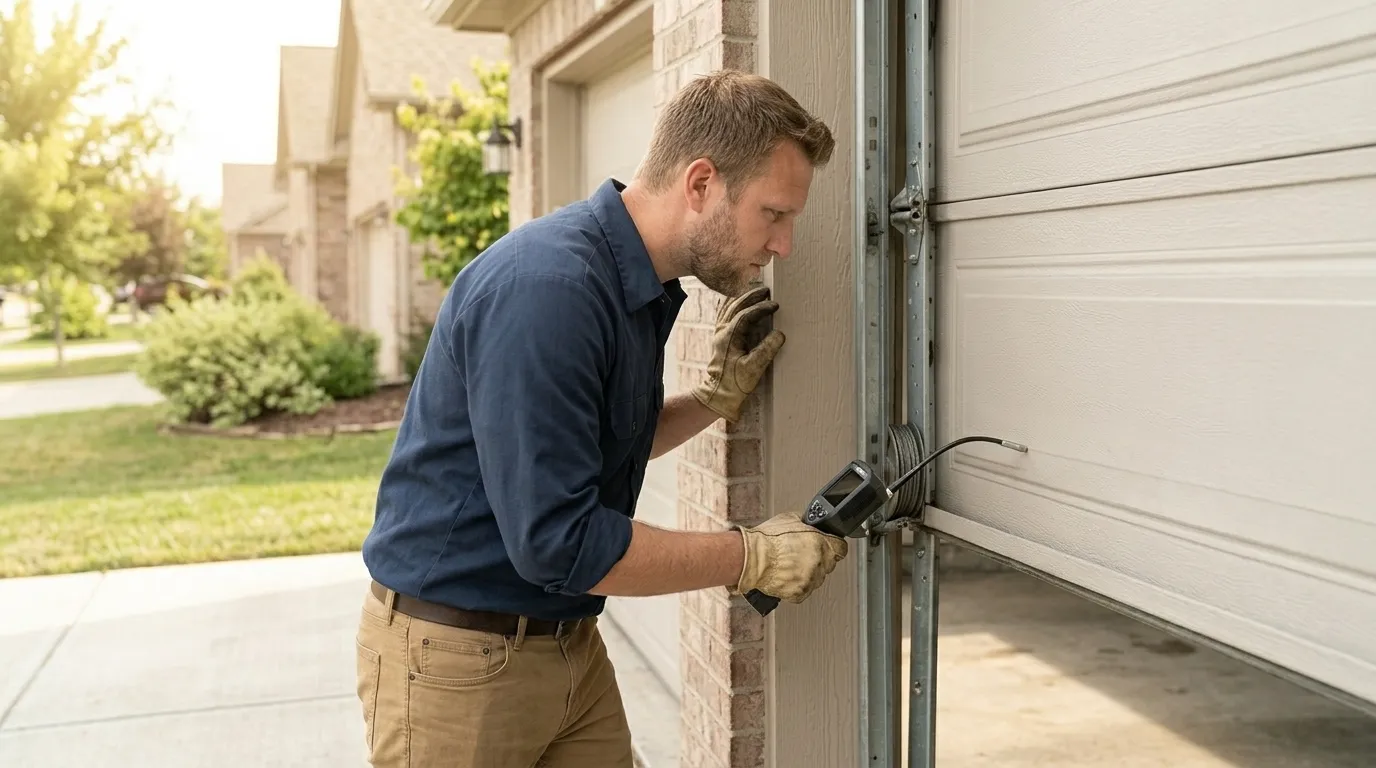
A technician tests the door under power and by hand and finds what actually failed.
3
Clear, up-front plan
You get the fix that’s needed and what drives the cost - before any work starts.
4
Repaired & tested
The repair is done, the door is set true and tested, and the work area left clean.
Serving Payson, AZ - tell us what your door’s doing and we’ll take it from there.
How do I know if I need a new opener or just a repair?
If the motor runs but the door struggles, reverses early, or the remote is unreliable on cold mornings, it's often gearing or the logic board wearing out from repeated temperature swings - common in this climate band. A tech can test the unit in ten minutes and tell you whether it's a board issue or the whole opener is done.
Will a new opener fit my existing track and header?
Not always. Homes here mostly date from 1979 to 2000, and headers and brackets from that era weren't always built for today's belt-drive motor weight. We check the mount before we quote the opener so you're not surprised by carpentry costs partway through the job.
Do you serve towns near Payson?
Yes, we cover the wider area including Star Valley, Pine, Strawberry, alongside Payson itself. Each of those towns has its own page with details specific to that area; this page covers the opener installation service itself.