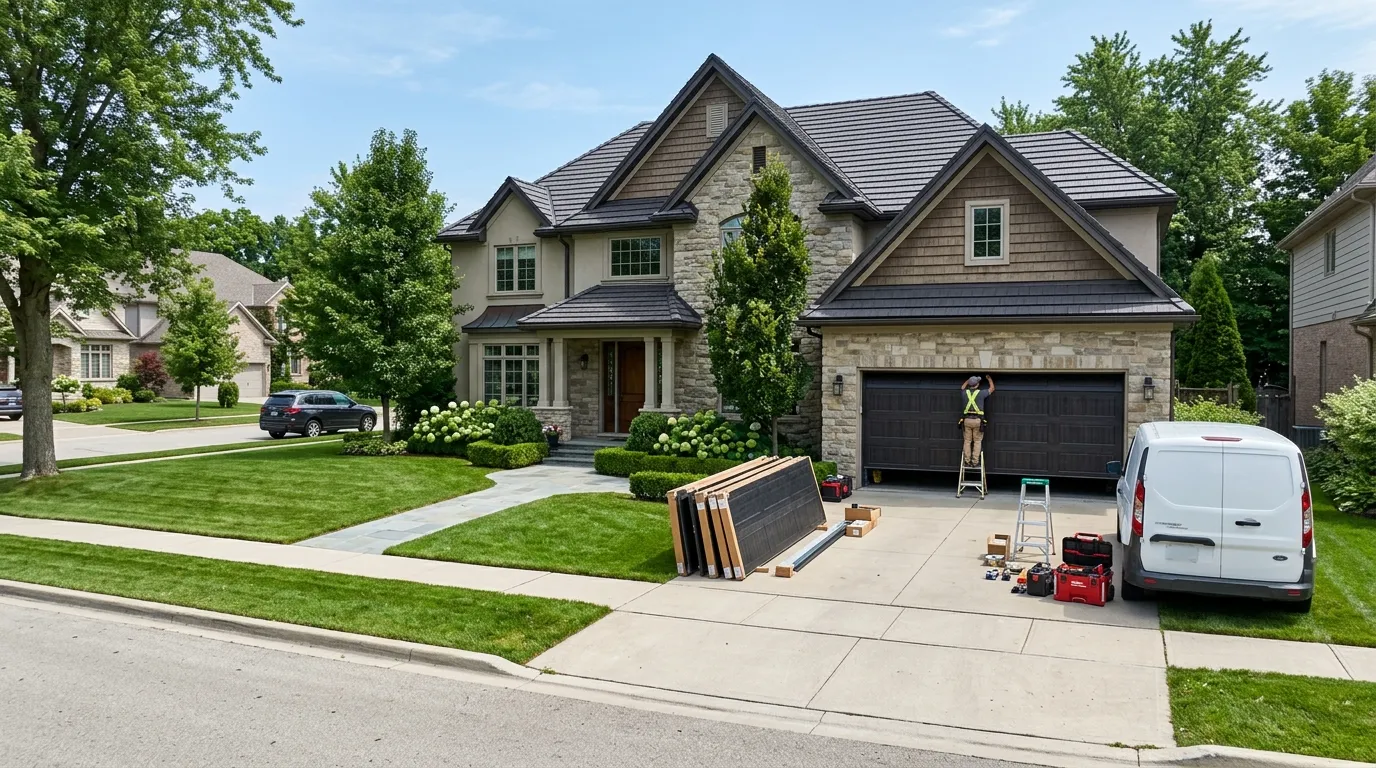
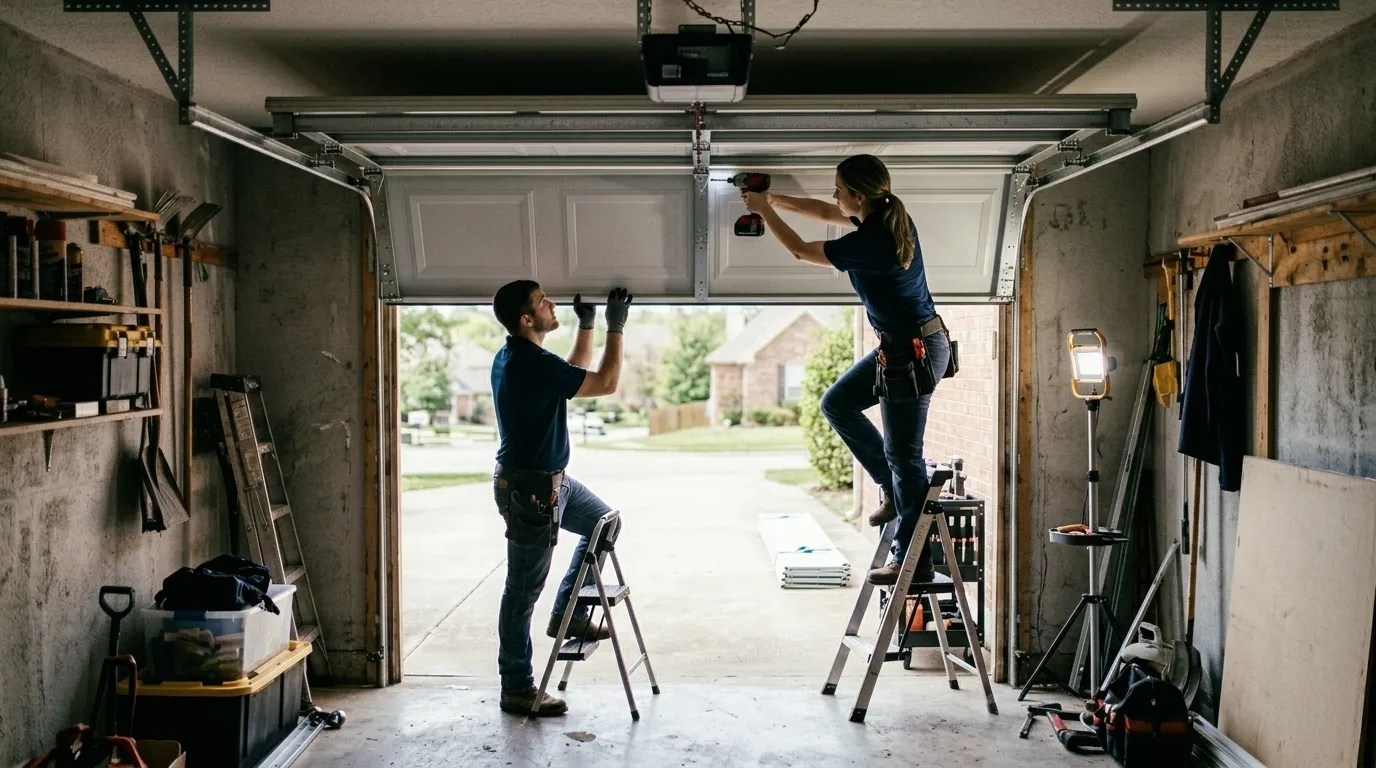
We don't post a price list here, because a spring job on a door installed in 1984 is not the same job as a torsion conversion on a door from 1998, and we're not going to pretend otherwise. What we can tell you is what drives the number up or down. Most houses in the Payson area were built between 1979 and 2000, with the median landing around 1984 - that puts a lot of original torsion hardware and first-generation chain-drive openers still in service, and parts for equipment that age aren't always sitting on a shelf. A single spring swap on newer hardware is a straightforward call. A full torsion conversion on a door that's still running the setup it shipped with, plus a panel that's rusted through at the bottom section, is a longer job with more line items. We quote on-site once we've seen the door, the track, and the opener, because guessing over the phone does neither of us any favors. If you want a number before we're standing in front of it, we don't have one that means anything.
How Local Conditions Play In
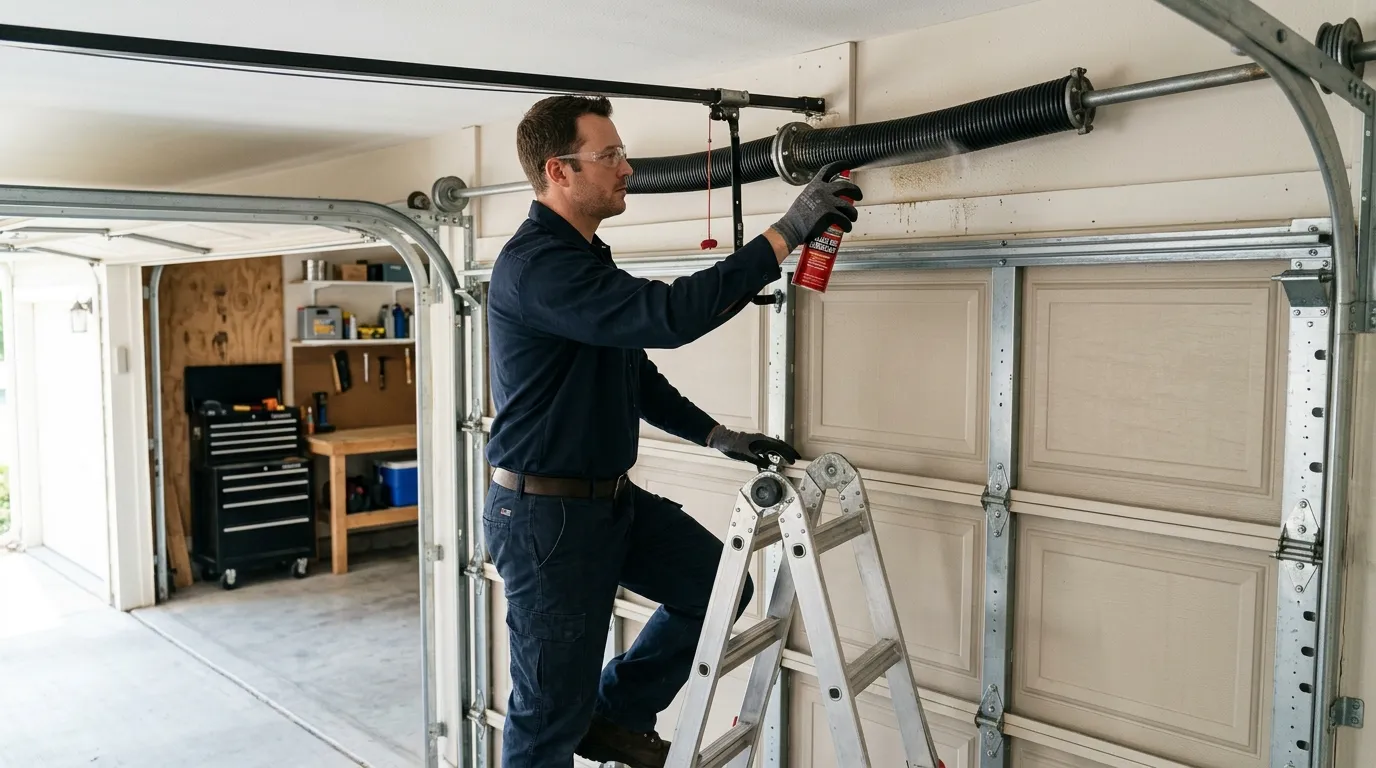
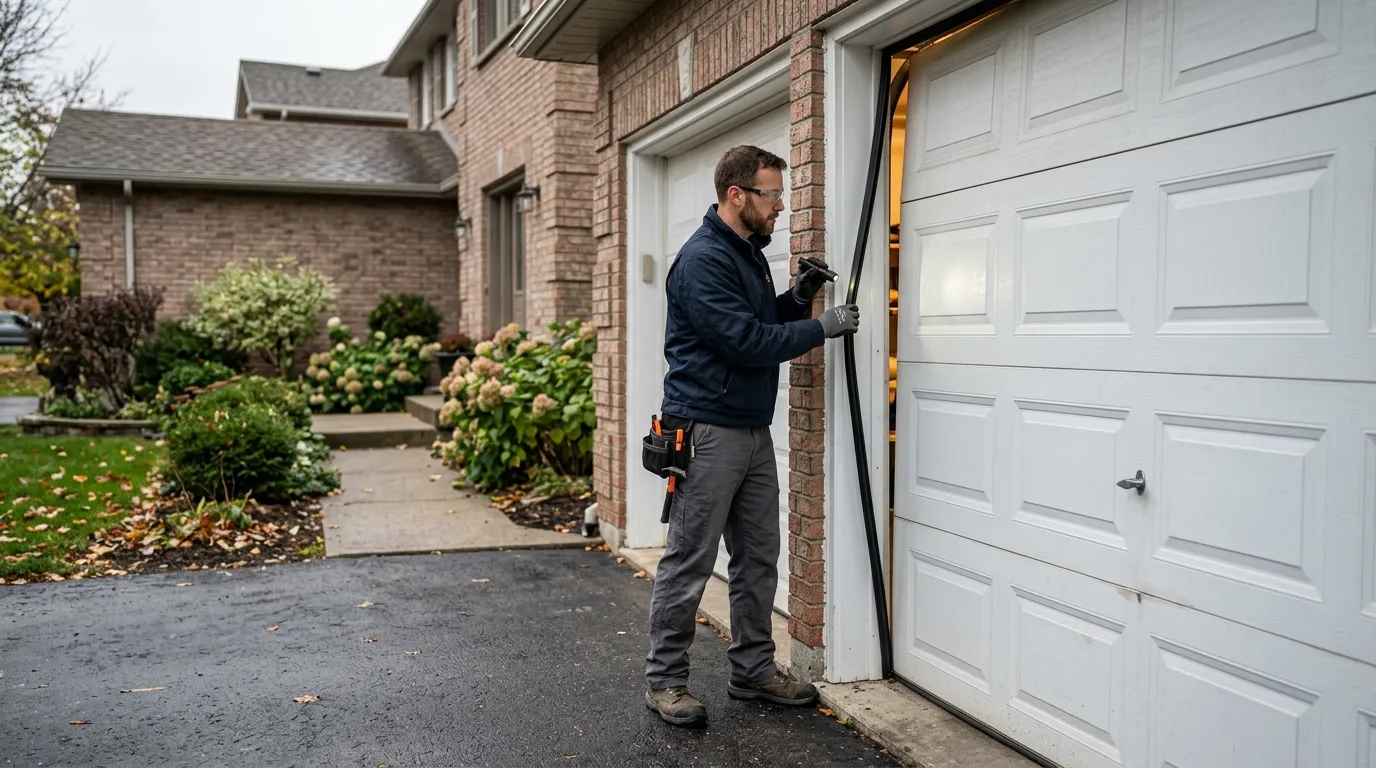
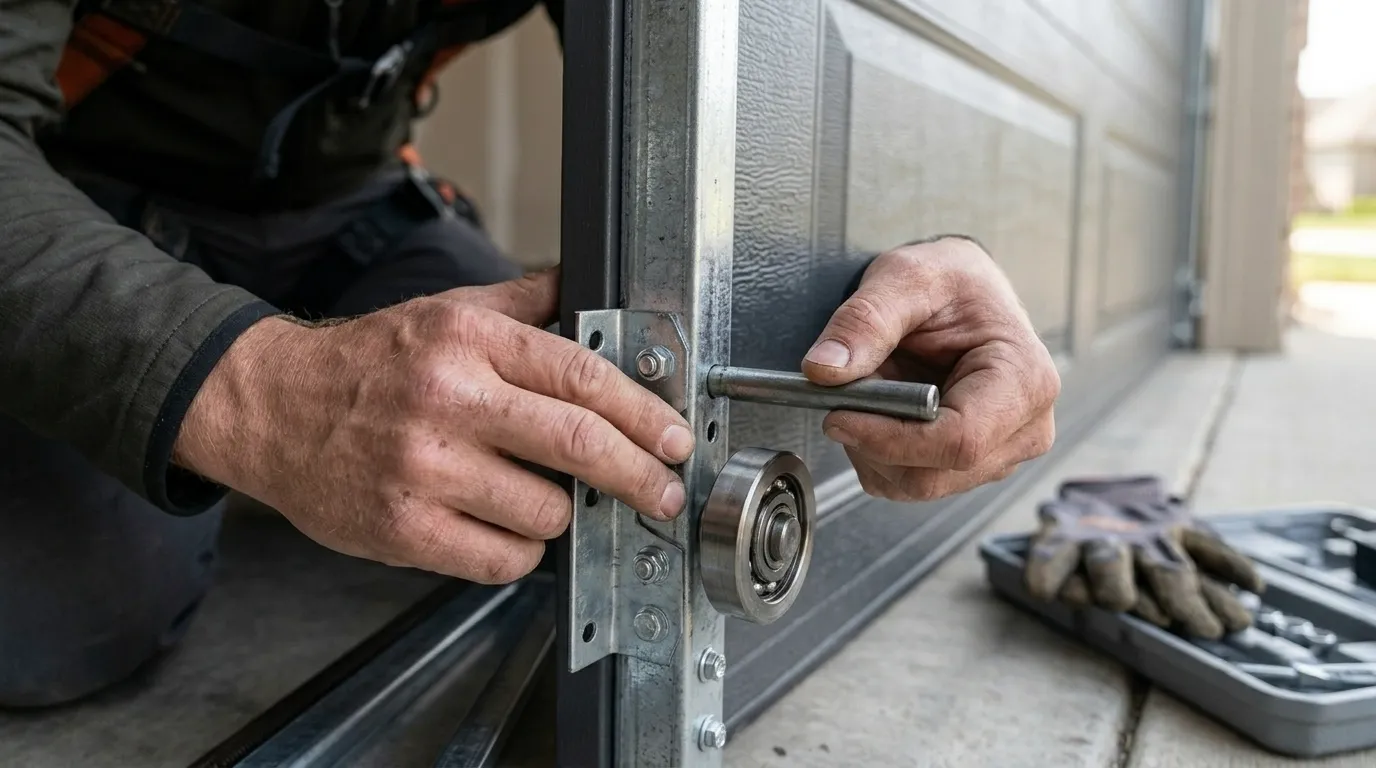
Payson sits in a cold-moderate climate band, and that shapes how a garage door ages here more than most people expect. Cold nights stiffen the grease packed into torsion springs, so a spring that lifts a door smoothly at 2pm can groan and hang up at 6am. Weatherstripping along the bottom panel and side jambs shrinks and pulls away from the frame over repeated freeze-thaw cycles, which lets cold air and debris into the garage even when the door looks closed. On houses built in the 1979-2000 window, that weatherstripping is often original or a single cheap replacement, not something swapped out on a schedule. Rollers on that same original hardware were built for a different era of daily temperature swing, and steel rollers especially will start binding in the track once cold-weather stiffness meets thirty-plus years of wear. None of this is dramatic - it's slow. A door that used to open in under ten seconds starts taking fifteen, then jerks partway through the cycle, and by the time it's loud enough to notice, the spring or the rollers have usually been struggling for a while.
When to Get Help
On a door with 1980s-90s hardware, a few signs mean it's past the point of waiting. If the door reverses on its own partway up, that's usually a spring that's lost tension trying to compensate - on original torsion hardware from this era, that spring has likely never been replaced. A gap that's widened between the bottom panel and the floor, especially paired with stiff or grinding rollers, points to worn track alignment that's been building for years, not weeks. If the opener strains audibly or the door slows to a crawl partway through the cycle, the motor is working harder than a healthy spring should require it to. We'll say plainly: if you've got an original 1980s opener still running and it starts smoking, sparking, or tripping the breaker, that's not a repair call - replace it. Trying to keep a thirty-five-year-old motor alive past that point isn't worth the labor, and we won't bill you to try.
What Is Going On
The pattern we see across the Payson area comes down to timing. Most of the housing stock here - across the neighborhoods built through the 1980s and 90s - went up in the same roughly twenty-year window, which means a lot of doors, springs, and openers are aging out on the same schedule rather than staggered over decades. Across the wider service area there are 3,066 households and 3,659 owner-occupied houses, and a large share share that same construction era, so when one homeowner's spring goes, a neighbor's is often not far behind. With a median household income of $61,964, we also see a fair number of owners stretch out the life of aging hardware longer than a spring or opener is really built for, which sometimes turns a $150 repair into a full replacement once the door binds hard enough to strain the opener too. Star Valley, six miles out, and Pine, twelve miles up the road, see the same construction-era pattern; Strawberry at fifteen miles and Sundance at nineteen southeast trend a little more mixed. None of that is a reason to worry about your door specifically - it's just useful context for why parts and timing work the way they do out here.
How it works
From “it’s stuck” to “it’s fixed”
A quick, honest process - no guesswork and no surprises.
1
Tell us what’s wrong
Describe the symptom - won’t open, loud bang, opener runs but the door won’t move.
2
On-site diagnosis
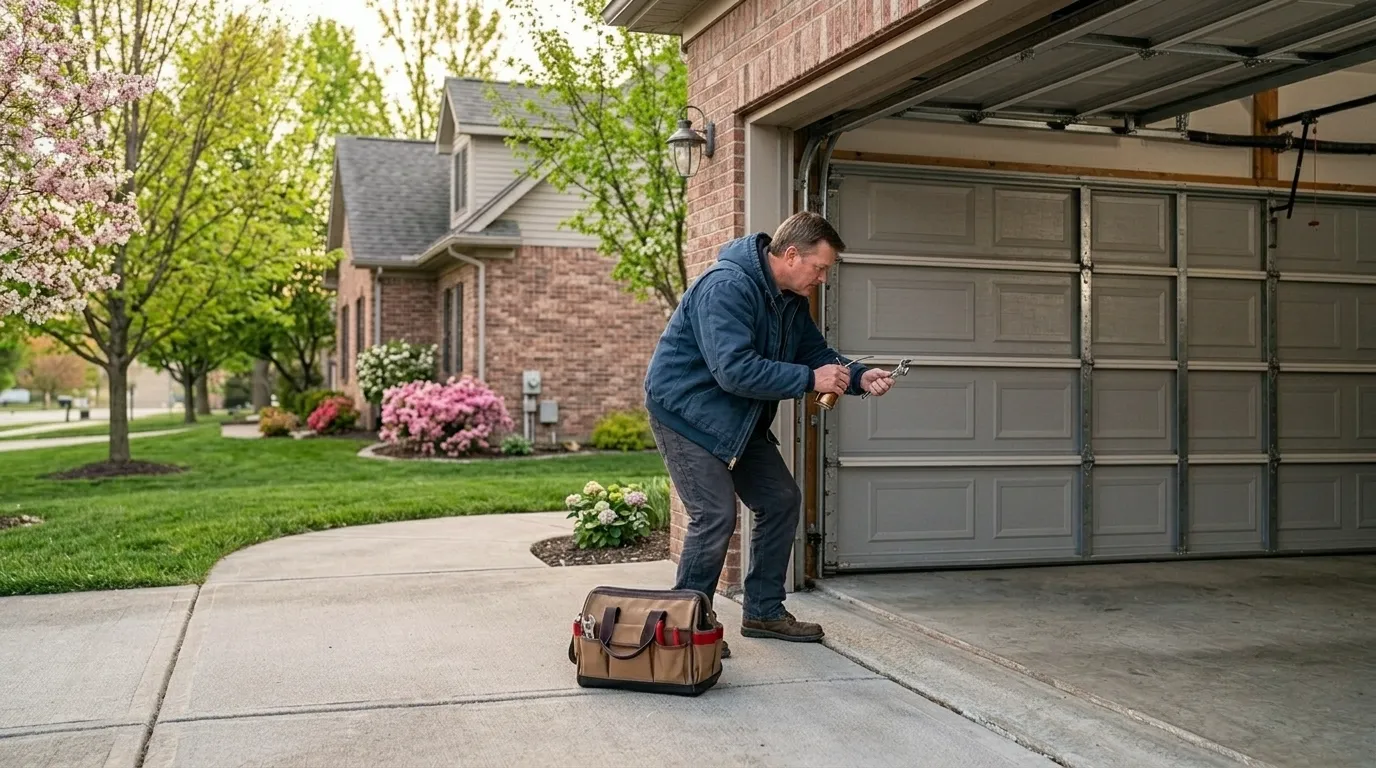
A technician tests the door under power and by hand and finds what actually failed.
3
Clear, up-front plan
You get the fix that’s needed and what drives the cost - before any work starts.
4
Repaired & tested
The repair is done, the door is set true and tested, and the work area left clean.
Serving Payson, AZ - tell us what your door’s doing and we’ll take it from there.
Why does my garage door only act up in the morning?
Cold nights stiffen the grease in torsion springs and can shrink weatherstripping enough that the door binds slightly in the track. By afternoon, once things warm up, the same door often runs fine. It's a sign the spring or rollers are wearing, not something to ignore just because it clears up later in the day.
Is my opener too old to keep repairing?
If it's original to a house built in the 1980s or 90s and it's sparking, tripping the breaker, or straining audibly through the cycle, replacement usually makes more sense than another repair. We'll tell you honestly on-site if we think a repair is throwing money at a motor that's done.
Do you give prices over the phone?
Not real ones. A spring job on a door that's had one replacement looks different from a full torsion conversion on original 1980s hardware. We look at the door, the track, and the opener in person before we quote, because guessing costs you more than it saves.