How Local Conditions Play In
Payson sits in a cold-moderate climate band, and that matters more for openers than people expect. Cold nights followed by daytime swings put stress on the opener's circuit board and on any wiring that's aged along with a house built in the 1980s or 90s. Insulation and vapor sealing standards from that era weren't built around today's electronics, so garages in the older sections stay colder and damper longer into the morning than a newer build would. That combination - an original-era board and a garage that swings in temperature - is exactly what shortens the life of a logic board and makes a power interruption more likely to leave the unit stuck rather than just cycling back on its own. Houses across the three main areas built out through the 80s and 90s share this same pattern, so it's not a one-house problem, it's a housing-stock problem. None of this means every cold night causes a failure. It means that when a power cut does happen, an opener from that generation is less likely to recover cleanly than a newer one with surge protection built into the board.
When to Get Help
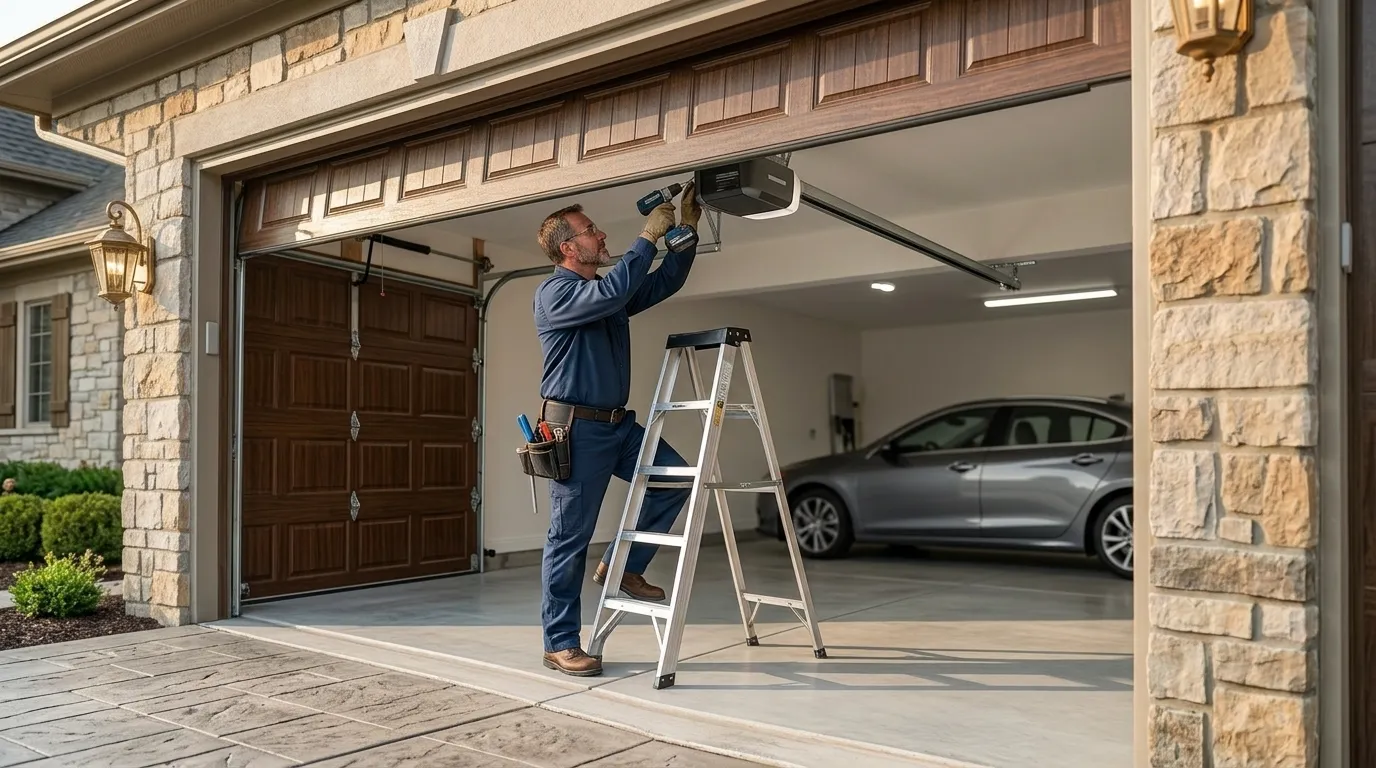
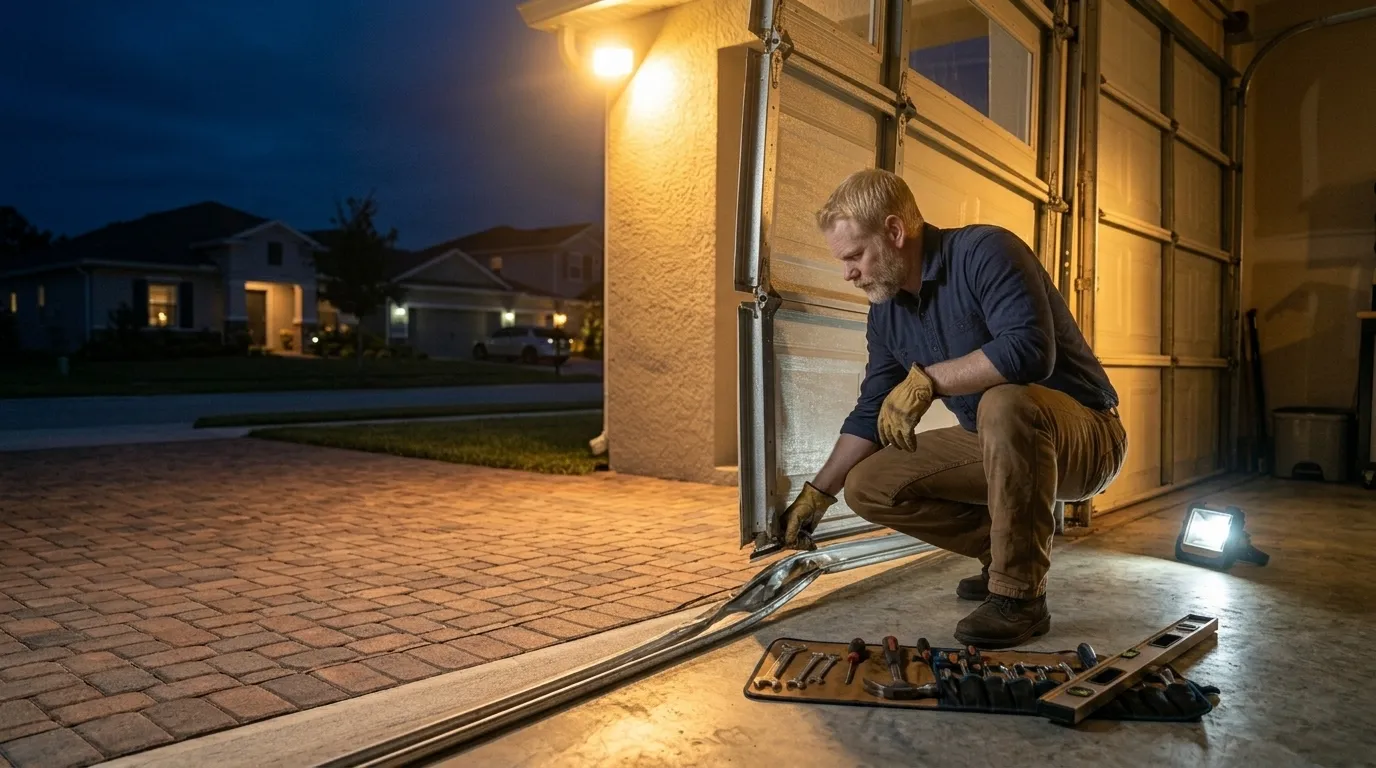
Call if the opener hums or clicks but the door doesn't move after power comes back - that's usually the board failing to reset, not the motor itself. Call if the wall button lights up but nothing happens at the rail. Call if you've pulled the manual release cord to get the car out and now the door won't reconnect to the opener; that's a common side effect of a power cut on an older drive system and it's a five-minute fix in person but a frustrating one to diagnose over the phone. Don't call us for a door that just seems slow - that's more often a spring or roller issue than a power problem, and it's worth mentioning so you don't wait on the wrong repair. If the opener is original to a house from the 1980s or 90s and it's died more than once this year, that's worth a conversation about replacement timing rather than another patch repair, since parts for that generation are getting harder to find.