What Cold Winters Do to Payson's 1980s and 90s Garage Doors
Payson homes built 1979 to 2000 have original torsion hardware that struggles in cold snaps. See what drives repair costs and when a spring needs a call.
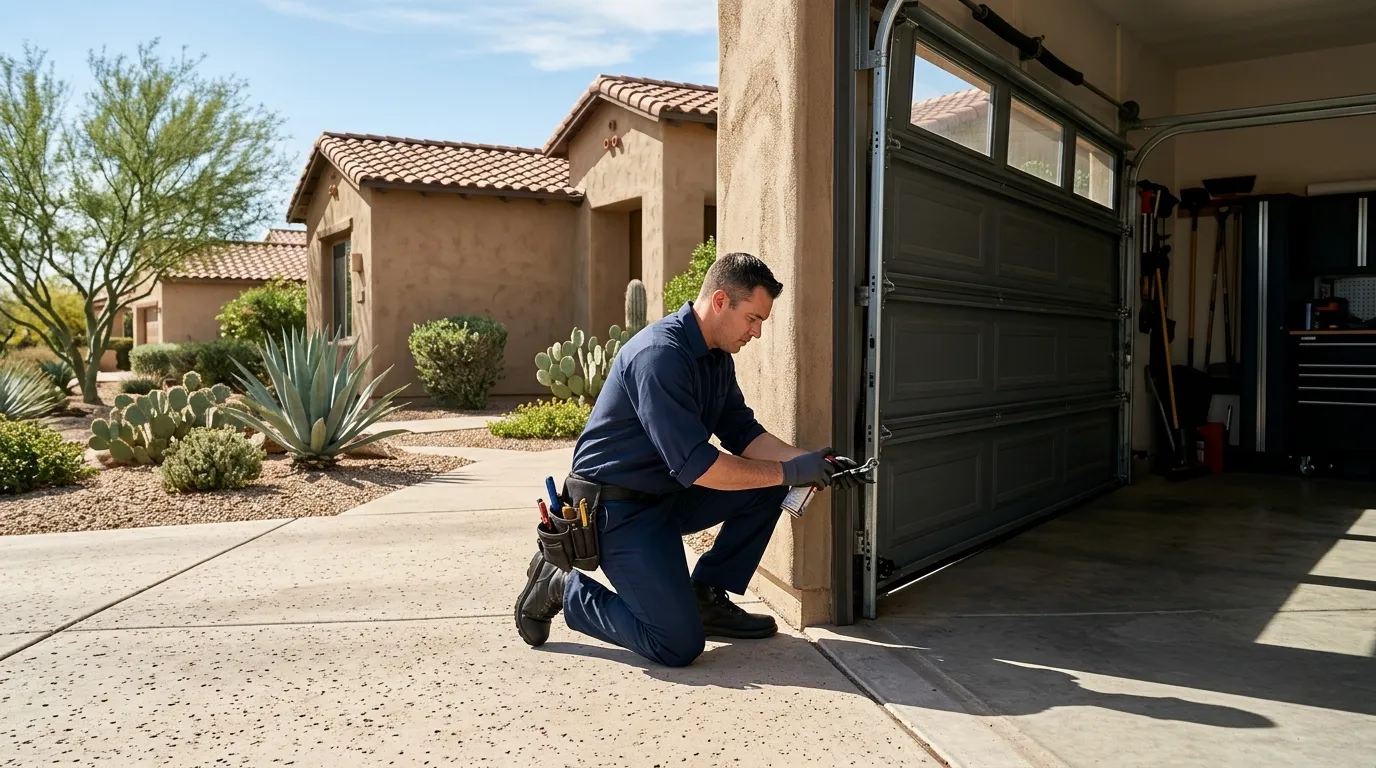
We don't quote a number here without seeing the door, because what you pay depends on what's actually failed and how old the hardware is. What we can tell you is what drives the bill in this part of Payson. Most of the housing here went up between 1979 and 2000, spread across three main pockets of that era, so a lot of doors still run original torsion springs and openers that are pushing forty years old. Parts for that vintage aren't always sitting on a shelf, and a spring sized for an older, heavier wood-panel door isn't something you swap for a generic off-the-shelf unit without checking the drum and shaft first. With 3,066 households and a median income of $61,964 across the service area, a lot of owners are weighing a repair against a full replacement rather than assuming the cheaper fix is the right one. If your door is original to a house built in the 80s, expect the conversation to include whether the track and hardware are worth matching, not just the spring itself. That's the honest answer before we've looked at anything.
How Local Conditions Play In
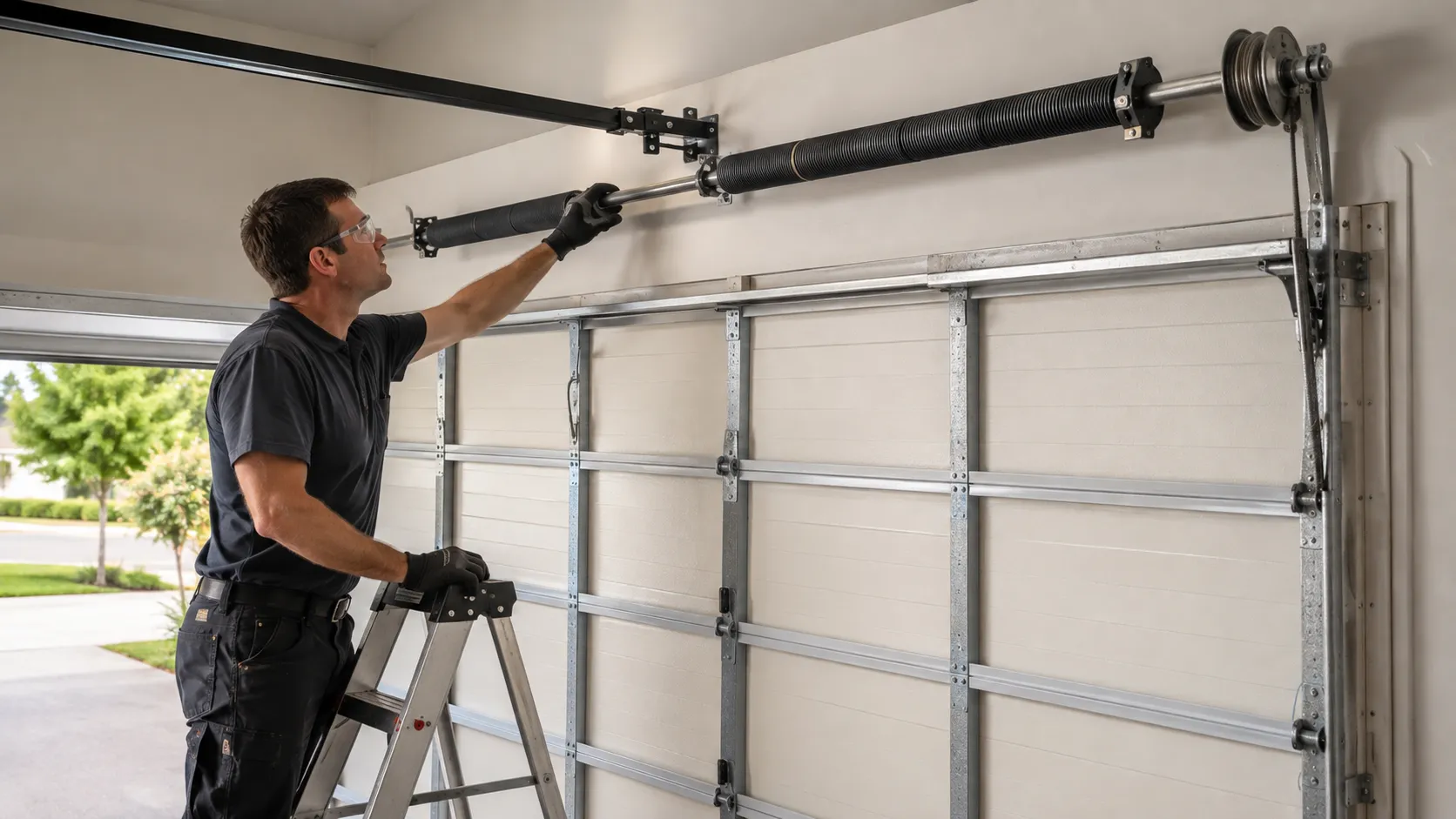
Payson sits in a cold moderate climate band, and that matters more for garage doors than people expect. Steel spring wire loses flexibility as temperature drops, and a spring that's already fatigued from twenty or thirty years of cycles is the one that snaps on the first cold morning of the season, not the mild afternoon before. Houses out toward Star Valley, six miles out, and the stretch running toward Pine at twelve miles sit in the same weather pattern and the same building era, so the failure pattern doesn't change much block to block. Homes built in this 1979-2000 window generally used torsion hardware sized for the doors of that period, heavier than a lot of what goes into new construction now, and heavier steel under cold stress is exactly where a worn spring gives out. It's also why openers strain harder here in winter: the gears and drive components weren't built expecting daily cold-start torque decades into their service life. None of this means every door is on borrowed time, but a door original to a house from that era, in this climate, is carrying more wear than the same door would in a warmer town.
When to Get Help
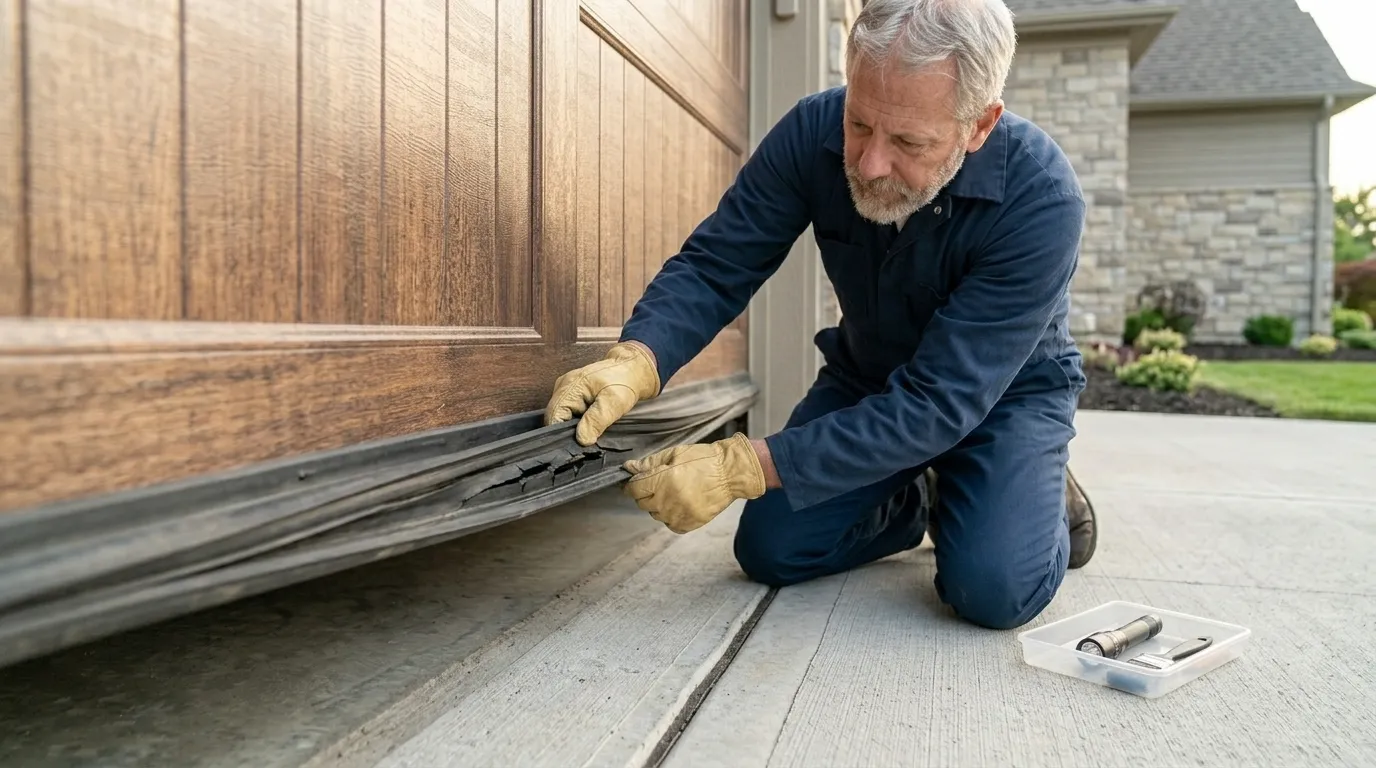
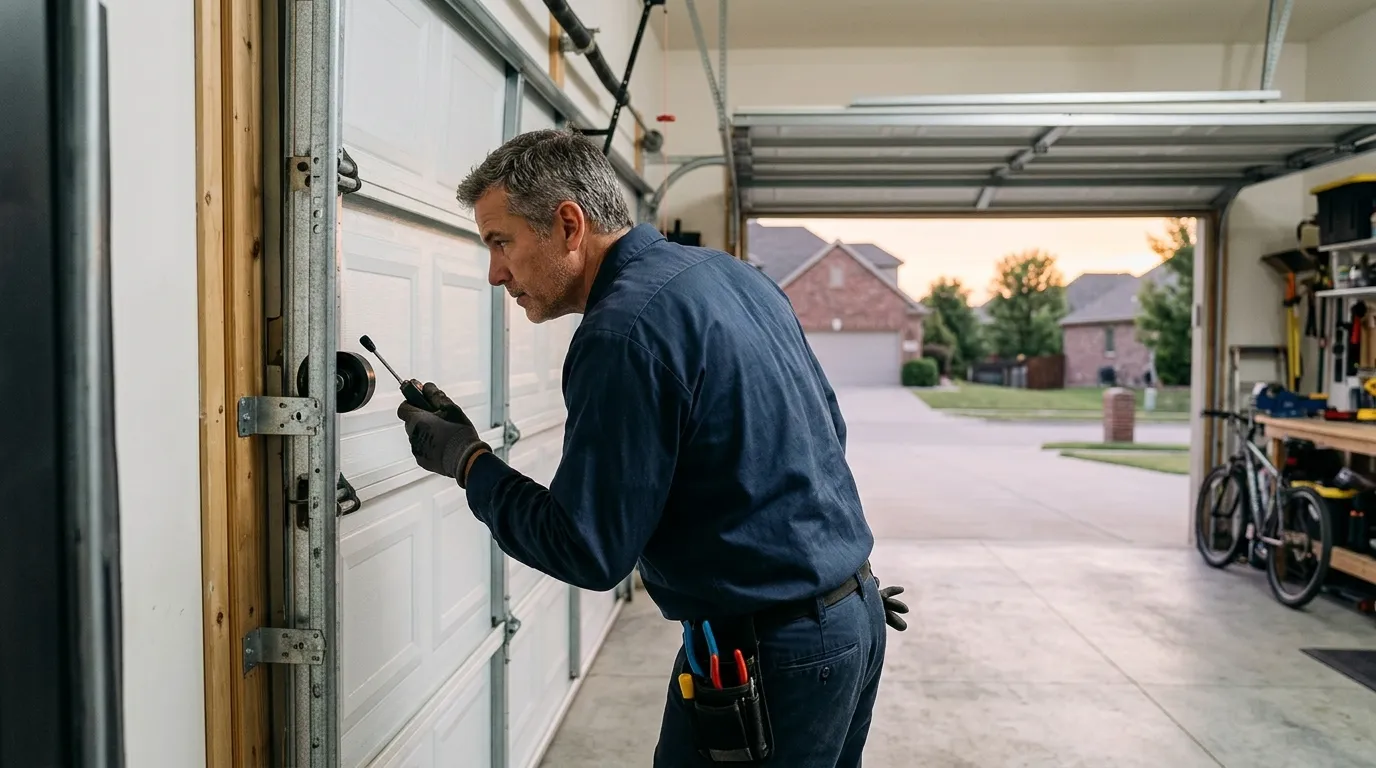
Call before the spring goes, not after, if you can catch the signs. A door that's noticeably heavier to lift by hand than it used to be, cables that look frayed at the bottom bracket, or a door that hangs crooked when it opens are all signs the spring is close to done. On original hardware from a house built in the 1980s or 90s, we'd rather look at it while it's still working than get the call after it's let go under tension, which is the more dangerous version of the same job. If your opener is straining audibly on cold mornings but fine by afternoon, that's the temperature effect on aging spring steel, and it's worth a look before winter, not during the week it fails. One honest limit: if the door itself is original and the track has warped or rusted, replacing just the spring is a short-term fix, and we'll tell you that rather than sell you a patch.
What Is Going On
The short version: a lot of Payson's garage doors are original equipment on houses that are now 25 to 45 years old, and torsion springs have a rated cycle life that doesn't stretch indefinitely no matter how well they were installed. A spring built into a door from the 1979-2000 construction wave has likely seen tens of thousands of open-and-close cycles, and cold makes the last few thousand of those harder on the metal. That's not a defect in the original build, it's just what steel does over decades in this climate band. The three main areas of housing stock here, all from roughly the same period, mean the same failure is showing up on a similar timeline across the service area rather than in one isolated pocket. When a spring finally lets go, it's usually not sudden decay, it's the accumulated fatigue catching up on a cold day. That's the pattern we see, and it's the reason a proactive look at an original-era door beats waiting for the morning it won't lift at all.
How it works
From “it’s stuck” to “it’s fixed”
A quick, honest process - no guesswork and no surprises.
1
Tell us what’s wrong
Describe the symptom - won’t open, loud bang, opener runs but the door won’t move.
2
On-site diagnosis
A technician tests the door under power and by hand and finds what actually failed.
3
Clear, up-front plan
You get the fix that’s needed and what drives the cost - before any work starts.
4
Repaired & tested
The repair is done, the door is set true and tested, and the work area left clean.
Serving Payson, AZ - tell us what your door’s doing and we’ll take it from there.
Why did my garage door spring break on such a cold morning?
Cold makes steel spring wire stiffer and more prone to snapping under tension, especially once the spring is already fatigued. If your house was built between 1979 and 2000, that spring may be original, and a cold snap is often what finally finishes off metal that's been weakening for years.
Is it worth replacing just the spring on an older door?
Sometimes. If the track and hardware are still square and in decent shape, a spring swap can be a straightforward fix. But on original equipment from the 1980s or 90s, we check the whole system first, because replacing a spring on a warped track just moves the next failure a few months down the road.
How do I know if my door's hardware is original?
If your house was built in the 1979-2000 window common to this area and the door has never been serviced, there's a good chance it's original. Signs include an opener with a chain drive and no keypad, and springs mounted on a single center shaft rather than dual torsion springs.