Garage Door Repair Built Around Payson's Housing Stock
Torsion spring and opener repair for Payson homes built mostly between 1979 and 2000, where cold nights and original hardware wear the same parts out early.
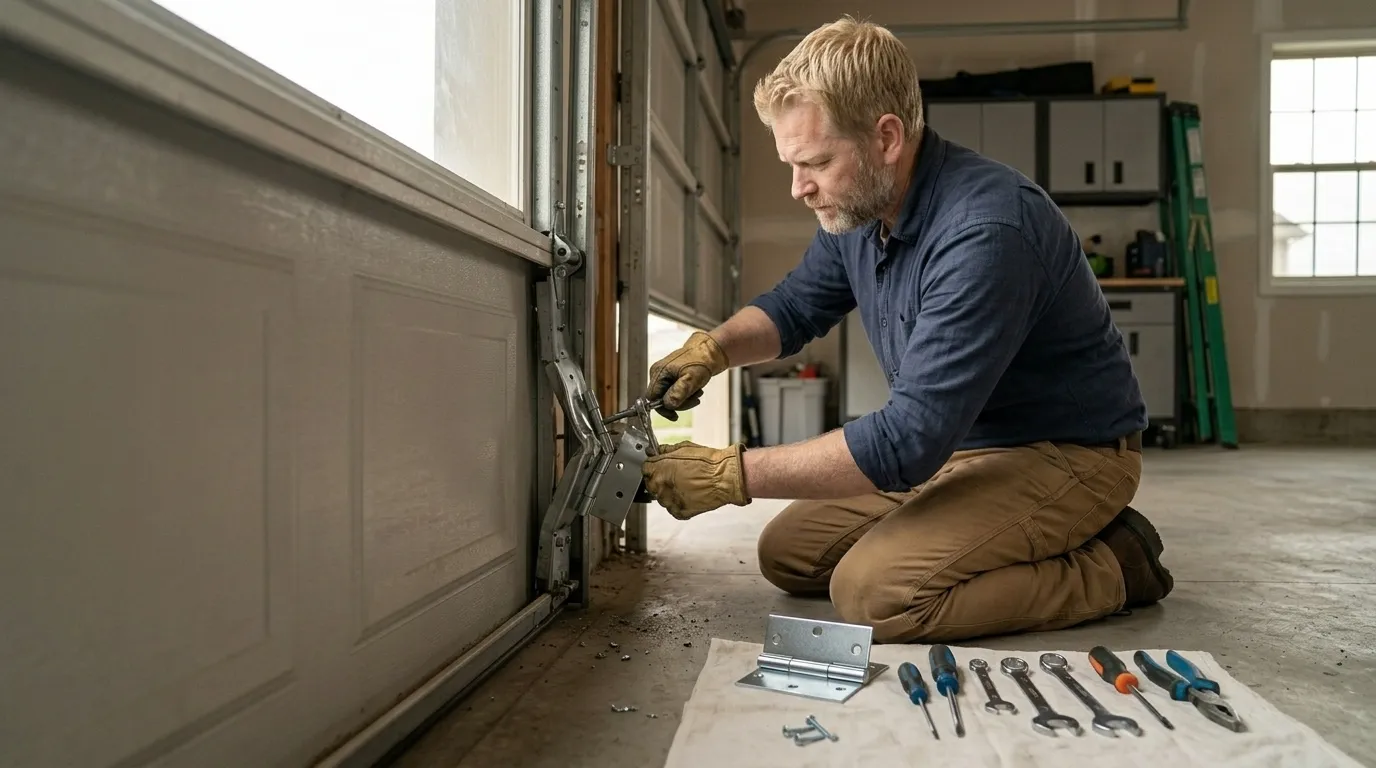
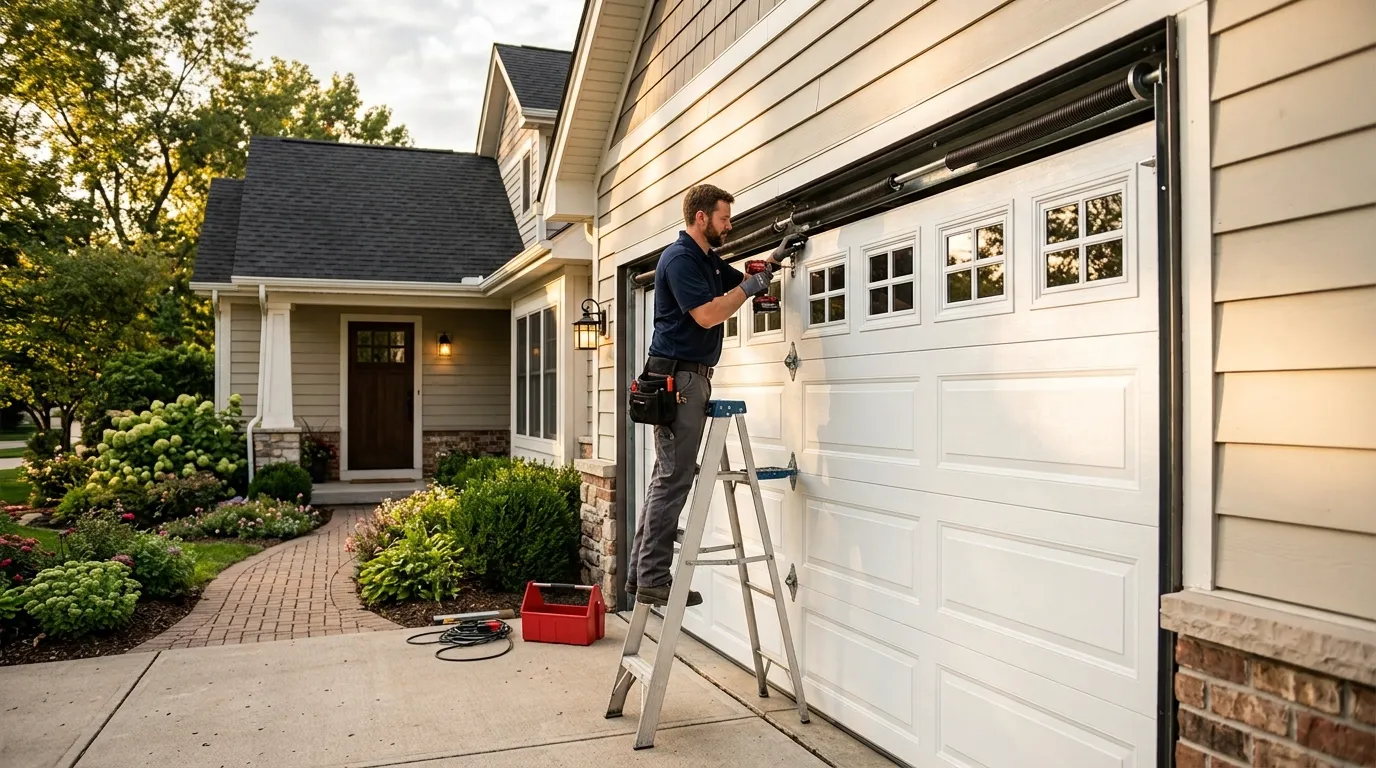
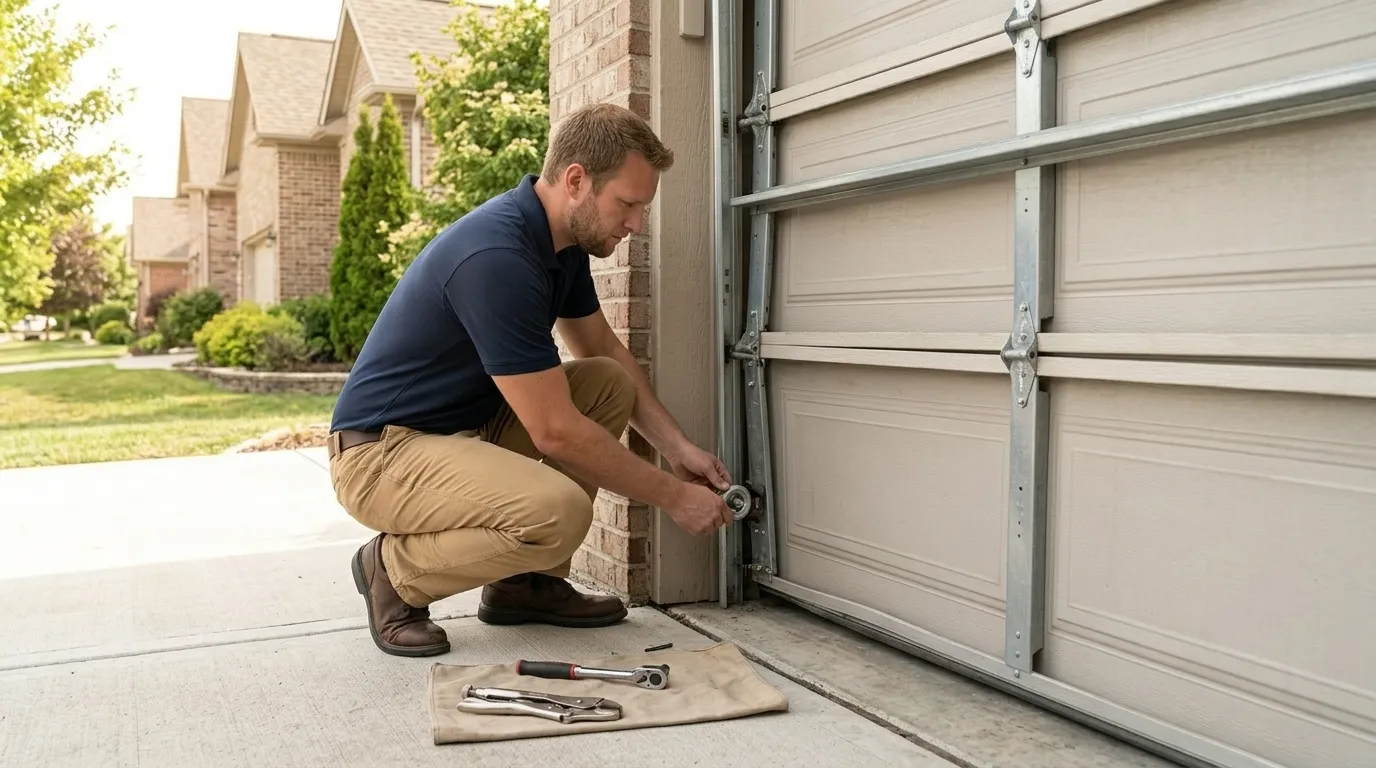
Most calls in Payson start the same way: a door that won't lift, or one that lifts a few inches and stops. On a torsion spring job, that means disconnecting the opener, clamping the shaft, unwinding the old spring under control, and setting a replacement matched to the door's weight and drum size. On an opener job, it's testing the logic board, the limit switches, and the drive gear before we touch anything else, because a bad capacitor and a stripped gear look identical from the driveway.
Because a lot of Payson's housing went up between 1979 and 2000 (median build year 1984), we're often working with hardware that's original or close to it - side-mounted torsion springs, older steel tracks, sectional doors that were never upgraded when the opener was swapped out. That changes what's in the truck. We carry spring sizes and drum combinations that match that era's door weights, not just what's common in new construction.
A full repair, start to finish, usually runs 45 minutes to a couple of hours depending on whether it's a spring swap, a cable replacement, or a full opener changeout. We test the door under load before we leave - balance, travel, auto-reverse - not just that it goes up and down once.
What You Pay
We don't have a flat number to quote here, because torsion spring sizing and opener parts vary by door weight and what's already installed - and giving a number that isn't tied to your actual door does you no favors. What we can tell you is what drives the cost: whether it's a single spring or a pair, whether the drums and cables need replacing along with the spring (they often do on original hardware from the 1980s and 90s), and whether the opener itself needs a board or a full unit.
Household income across the service area sits at a median of $61,964, and most jobs we run are priced to fit a homeowner making a repair decision on a fixed household budget, not a contractor doing a spec install. We'll give you a firm number before we start work, not after.
One honest limitation: if your door is original to a 1980s build and the track, hinges, and rollers are all worn together, patching just the spring can mean you're back out here in six months for the next failed part. We'll tell you when that's the case instead of just fixing what you called about.
Why This Fails Locally
Payson sits in a cold-moderate climate band, which means real temperature swings between summer afternoons and winter nights - not desert-flat weather. Steel torsion springs lose tension over repeated thermal cycling, and that cycling is harder on springs installed in the 1980s and 90s than on anything made with modern coated wire. Combined with three decades of daily use, springs from that era are frequently past the point where they're just weak - they're near failure.
Across the roughly 3,066 households and 3,659 owner-occupied houses we serve, the pattern repeats across the three main built-out areas from that period: original springs, original drums, and openers that were added or upgraded later without touching the spring system underneath. That mismatch - a newer opener straining against a tired original spring - is one of the most common failure combinations we see.
Cold nights also stiffen old lubricant on tracks and rollers, which is why a door that worked fine in the afternoon can bind or grind first thing the next morning.
The Symptom
The most common call we get is a door that reverses itself a few inches after the opener tries to close it, or one that the opener strains to lift before giving up partway. Both point to a spring that's lost tension - the opener is trying to do a job the spring used to handle, and it can't sustain that for long before the motor or gears take the damage instead.
A close second is a door that's noticeably heavier on one side, or that tilts as it opens. That's usually one spring in a pair failing while the other is still holding, which puts uneven load on the tracks and rollers.
If you're within reach of Payson - out toward Star Valley (6 miles), Pine (12 miles), Strawberry (15 miles), or Sundance (19 miles southeast) - these are the same failure patterns we see on houses of the same age and hardware. If your door is groaning, reversing, or hanging crooked, don't keep running the opener against it; that's how a spring repair turns into an opener replacement.
How it works
From “it’s stuck” to “it’s fixed”
A quick, honest process - no guesswork and no surprises.
1
Tell us what’s wrong
Describe the symptom - won’t open, loud bang, opener runs but the door won’t move.
2
On-site diagnosis
A technician tests the door under power and by hand and finds what actually failed.
3
Clear, up-front plan
You get the fix that’s needed and what drives the cost - before any work starts.
4
Repaired & tested
The repair is done, the door is set true and tested, and the work area left clean.
Serving Payson, AZ - tell us what your door’s doing and we’ll take it from there.
Why did my garage door spring break with no warning?
Torsion springs don't usually snap out of nowhere - they weaken over thousands of cycles and years of temperature swings, then fail on an ordinary lift. In Payson, a lot of that hardware dates to the 1980s and 90s, so the spring was already near the end of its life before the day it finally let go.
Can I just replace the spring and skip the rest of the hardware?
Sometimes, yes. But on original hardware from the 1979-2000 build era, the drums and cables have usually seen the same wear as the spring. We check all three before quoting, and we'll tell you plainly if replacing just the spring means you're likely back here within the year.
Does cold weather really affect a garage door spring?
Yes. Payson's climate band runs cold-moderate, with real swings between daytime and overnight temperatures. That cycling stresses steel spring wire over time, and it stiffens old track lubricant, which is why doors often bind or strain more in early morning hours than in the afternoon.
How fast can you get to a stuck door?
We don't have a standard response window to quote you here - it depends on the day's schedule. Call and we'll give you a straight answer on timing for your specific job rather than a generic promise.