What You Pay
We don't have a price list to hand you here, and quoting one without seeing the door would be a guess dressed up as a fact. What we can tell you is what drives the number: whether it's a spring or a full opener, whether the track or drum needs replacing too, and how old the rest of the hardware is.
Pine's median household income runs $61,964, which is close to what we see across the towns we cover out of Payson - Star Valley, Strawberry. We size jobs the same way here we do anywhere else in that range: fix what's broken, don't sell what isn't. If a door from the 1980s needs one part, we replace one part. If the opener is original to a 1984 build and the logic board is gone, replacement usually makes more sense than chasing parts for something that old.
The Symptom
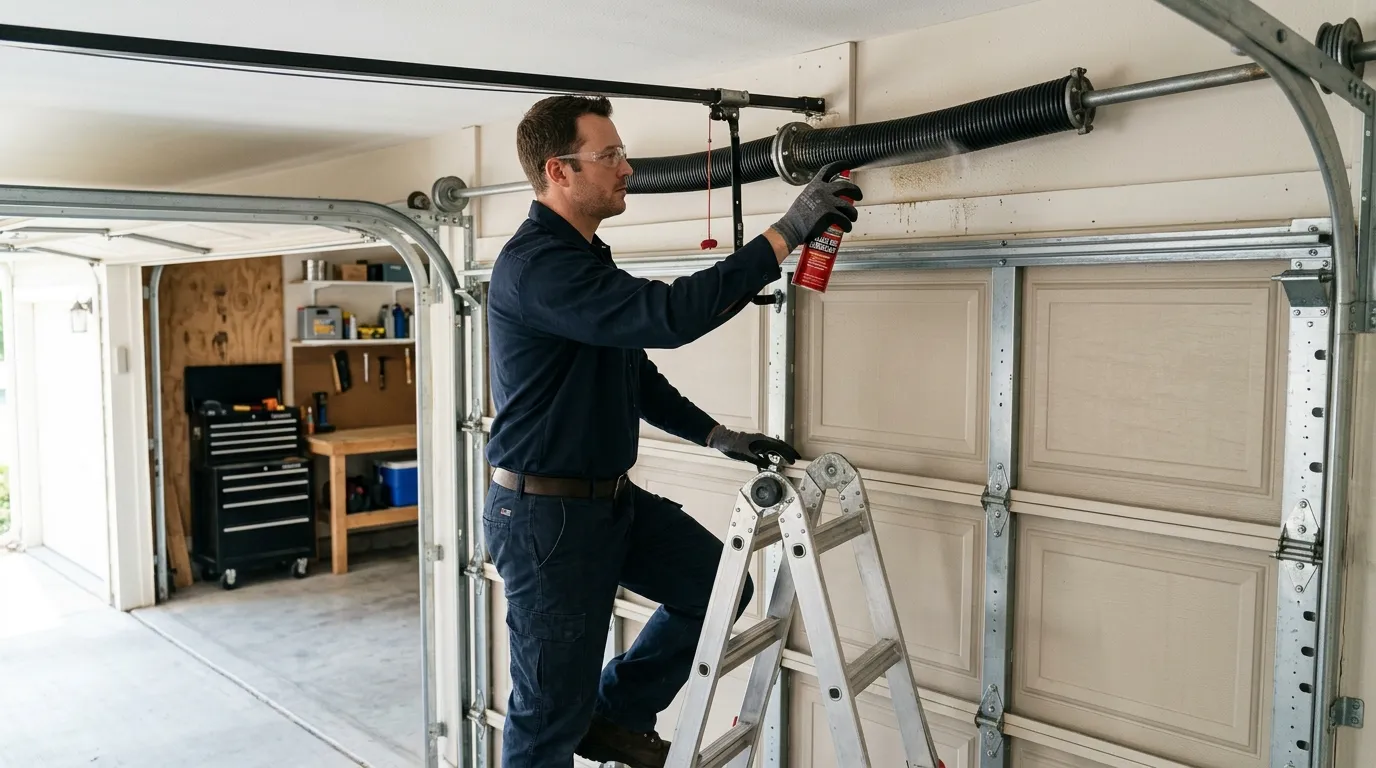
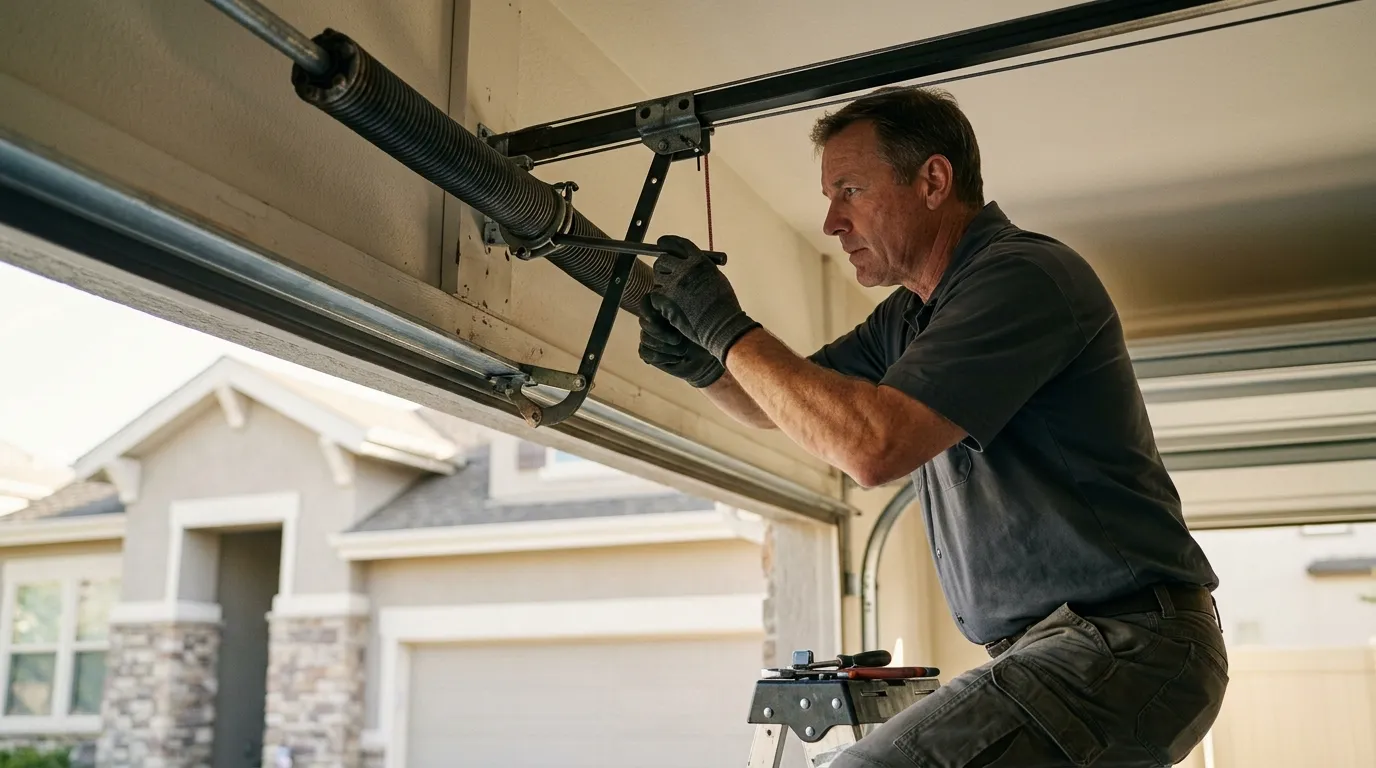
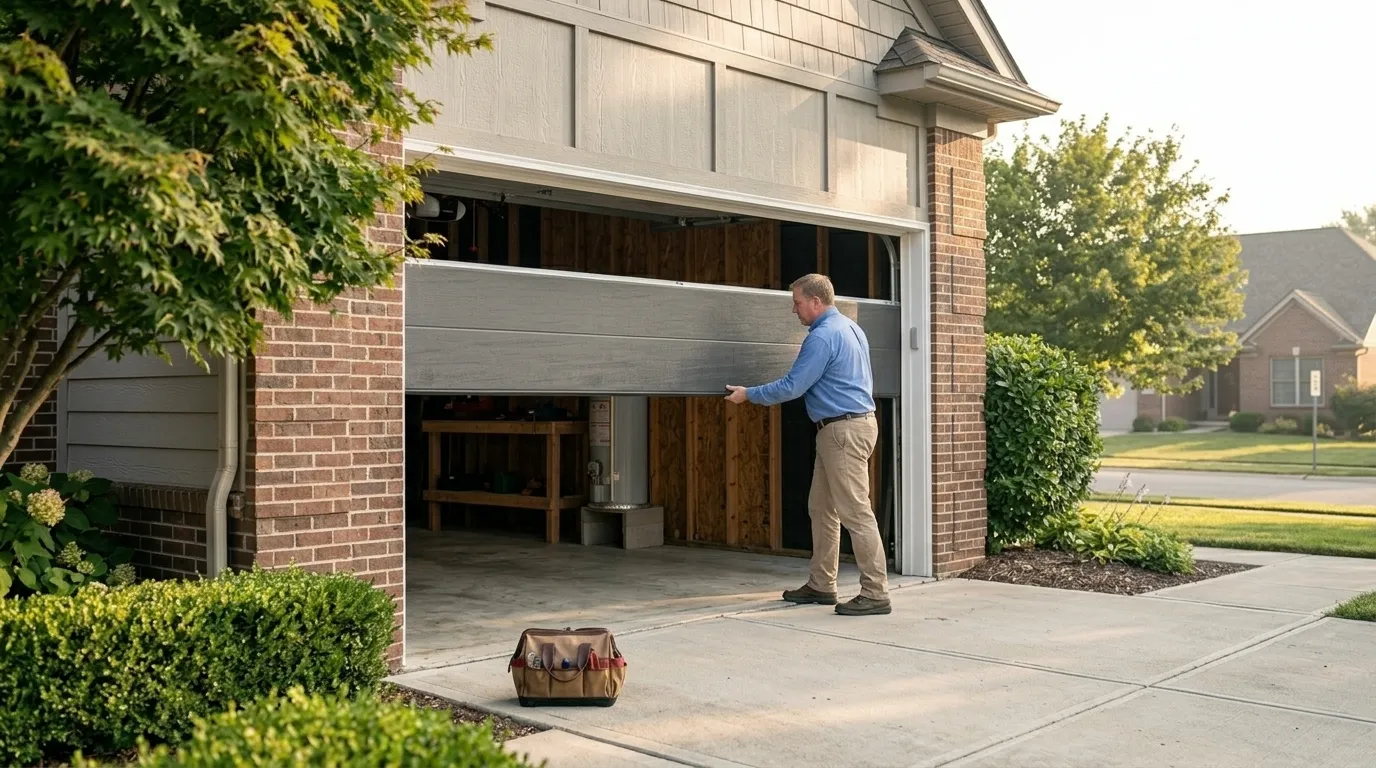
The calls we get from Pine tend to cluster around a handful of failures tied straight to the age of the housing stock. A door that slams down the last foot instead of easing shut - that's a spring that's lost tension, common once a torsion spring passes the thirty-year mark. A door that lifts an inch and stops, opener straining, motor humming - that's usually the same spring, just failing from the other direction.
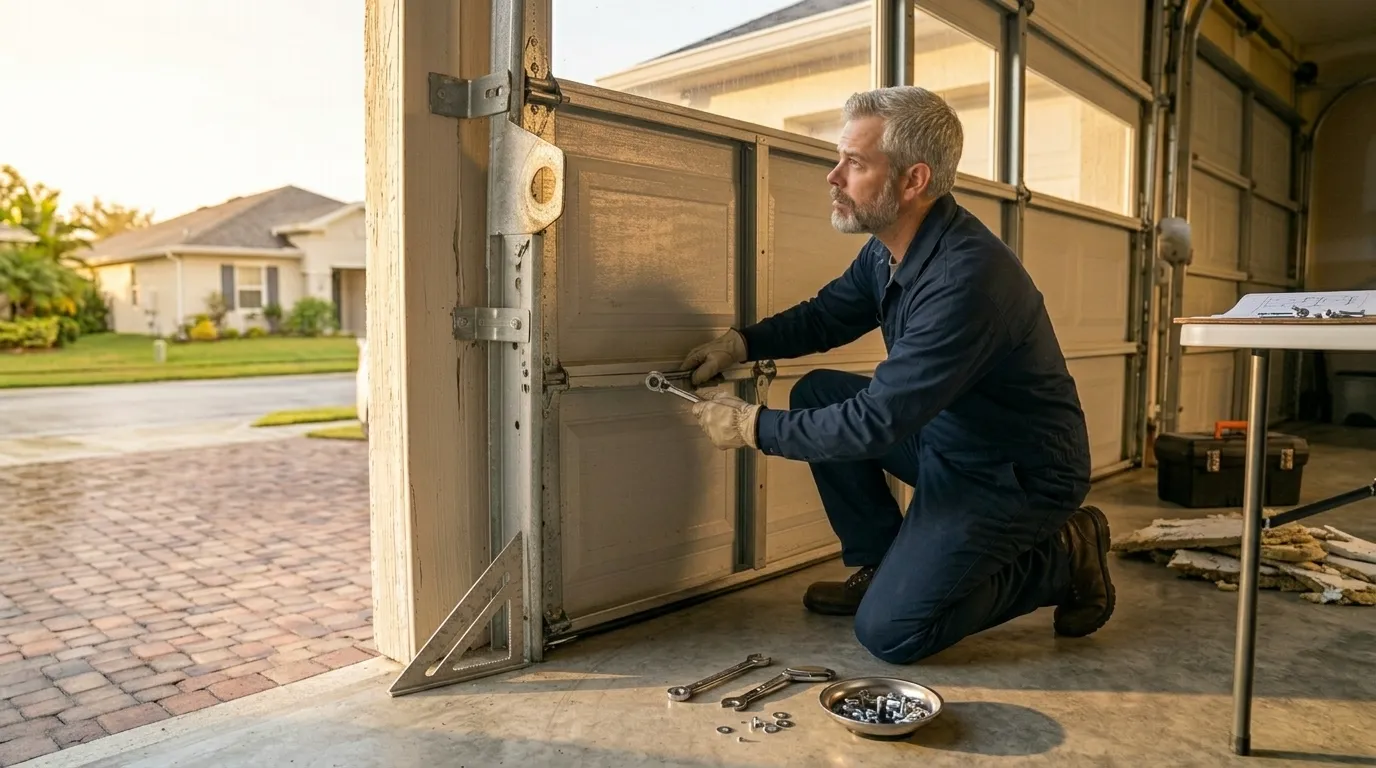
Cables that pop off the drum on one side and leave the door hanging crooked show up more in houses from this era because the original cable was never swapped when the spring was. And openers built into 1980s and '90s installs sometimes still run on the same chain-drive unit the house came with - when the gear inside strips, the door won't move at all, chain rattling loose.
A door that reverses right after it touches the floor is almost always a misaligned photo-eye, not a spring problem, and that one's cheap to fix once we're out there.
The Complications
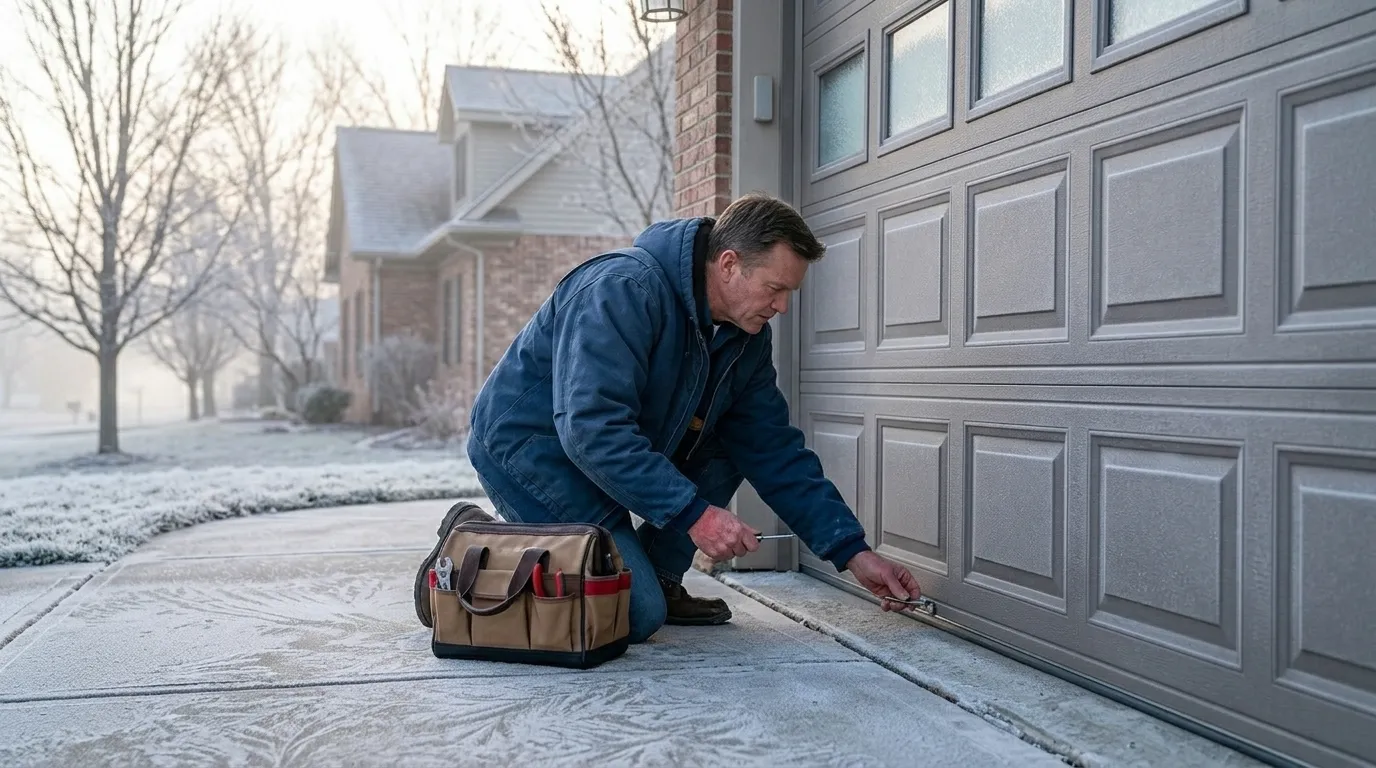
Pine sits twelve miles out from our shop in Payson, and we plan every job factoring that drive in - it's not a same-block call, so we're not going to pretend otherwise. Winters here run cold enough that steel springs and cable contract, which makes a spring that's already near the end of its life more likely to give out on a cold morning than a warm afternoon.
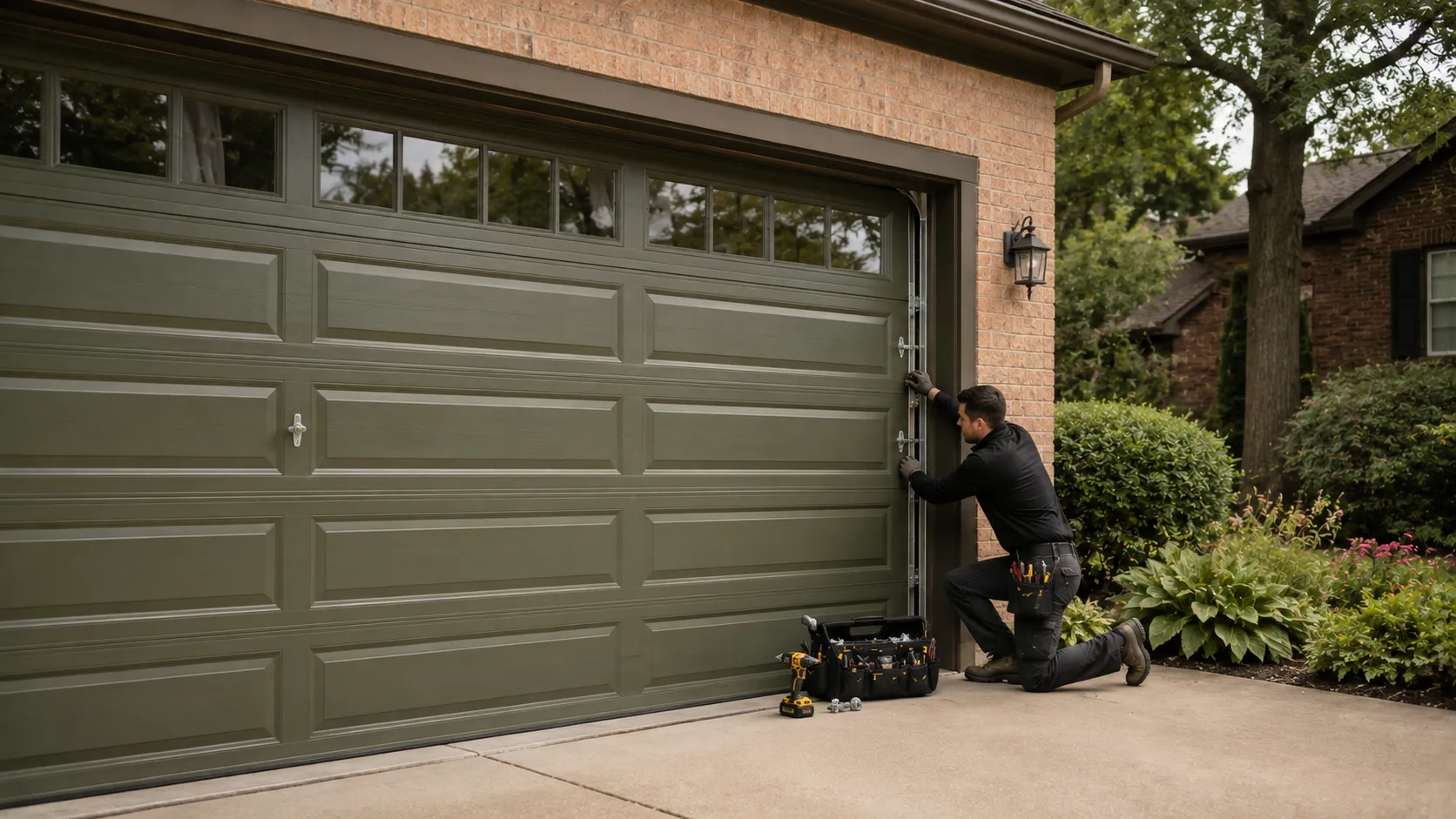
The other complication is the age spread. Most of the town's housing sits between 1979 and 2000, but that's a twenty-year window - a door from the early end of that range can have hardware a full generation older than one from the late end, even on the same street. That means two calls in Pine in the same week can need completely different parts. We don't guess at that over the phone; we look at the door before we say what it needs.