
What You Pay
Median household income out here sits at $61,964, and that number is the one that decides whether a roller job or a full door replacement makes sense on a given call. Rollers themselves are cheap parts. Nylon rollers with sealed bearings run a fraction of what a new door section costs, and replacing a full set of ten rollers is still a repair, not a remodel - it keeps a door that's otherwise sound working the way it did when it was installed. Where the math flips is when the rollers are failing because the track is bent, the door panels are rusted through, or the whole assembly is original to a house built back in 1984, the median year for this area. At that point you're not fixing a roller, you're patching a door that's earned its retirement, and a homeowner at this income level is usually better served putting that money toward one new door instead of stacking repairs on an old one. We'll tell you which side of that line you're on before you spend anything.
The Symptom
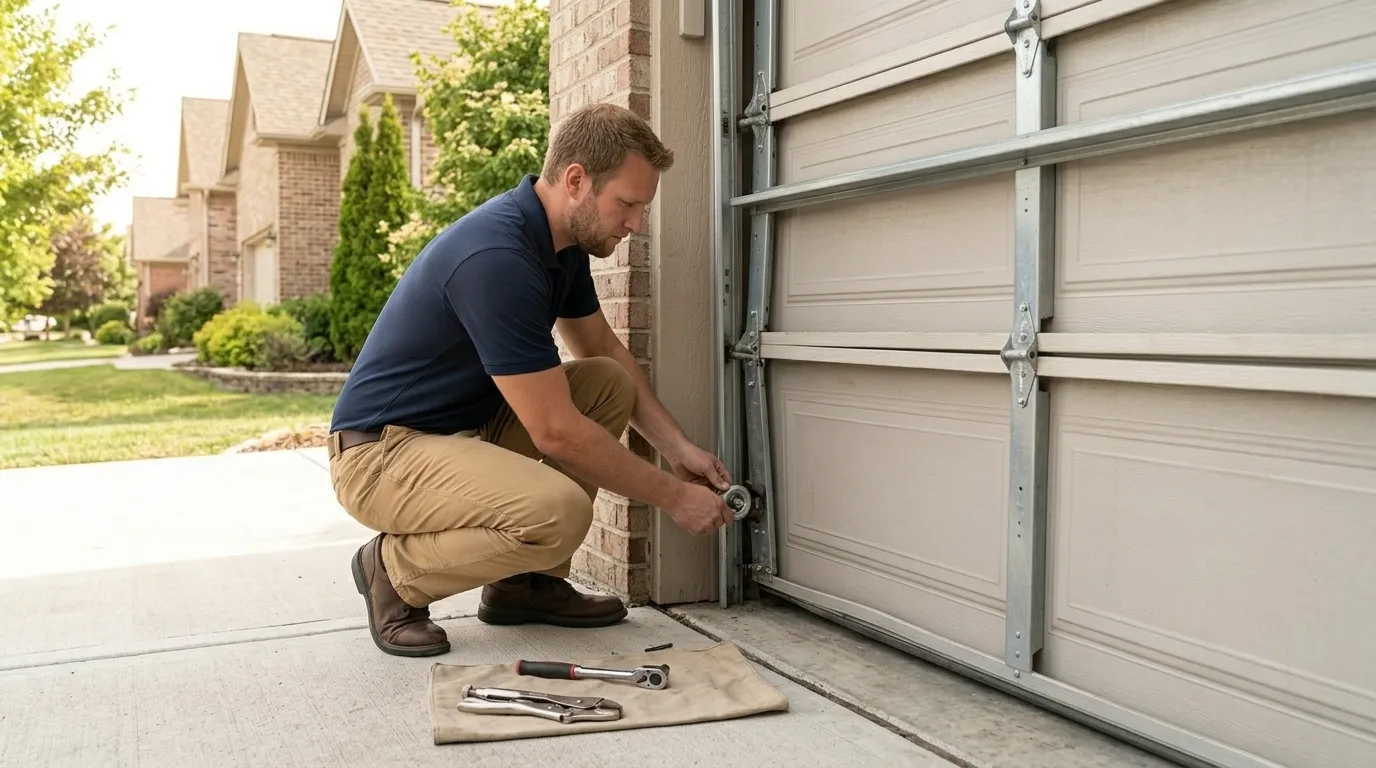
The complaint we hear most from Pine is a door that jerks or hesitates at the same one or two spots on every open and close, sometimes with a grinding or popping sound right at that point. That's a track-riding symptom, and it almost always traces to a roller - either the roller itself is worn down to the stem, or the bearing inside has failed and the roller is no longer spinning, just dragging. On a 1980s-era door that's original hardware, steel rollers with no bearing are common, and after three or four decades of Arizona temperature swings the grease dries out and the roller starts to flat-spot. You'll also hear it from the opener side: the motor strains harder than it should because the door isn't moving freely on the track, which some owners mistake for an opener problem. It isn't. Check the rollers first before you spend money on the opener.
The Complications
Two things complicate roller jobs on this side of the county. First, the winters here run colder than the desert floor - this area sits in a moderate-cold climate band - and cold makes old grease inside a roller bearing stiffen up, which can mimic a bad roller when the real issue is just temperature. We check for that before replacing parts a customer doesn't need. Second, houses in Pine built in the 1984 median-year range often have galvanized track that's pitted after decades of exposure, and pitted track chews up new rollers fast no matter how good the roller is. In that case the honest answer is to replace a section of track along with the rollers, not just the rollers alone - otherwise you're back out here in a year with the same complaint.