How Long It Takes
Diagnosing a circuit board fault takes longer than diagnosing a dead spring, because the door itself still moves and looks normal. The first step is running the opener through its cycle, checking the sensor LEDs, and testing the board's response to the wall button versus the remote. If the board is bad, swapping it is a straightforward job once we've confirmed that's the actual fault - it's the confirming part that eats the time, not the swap.
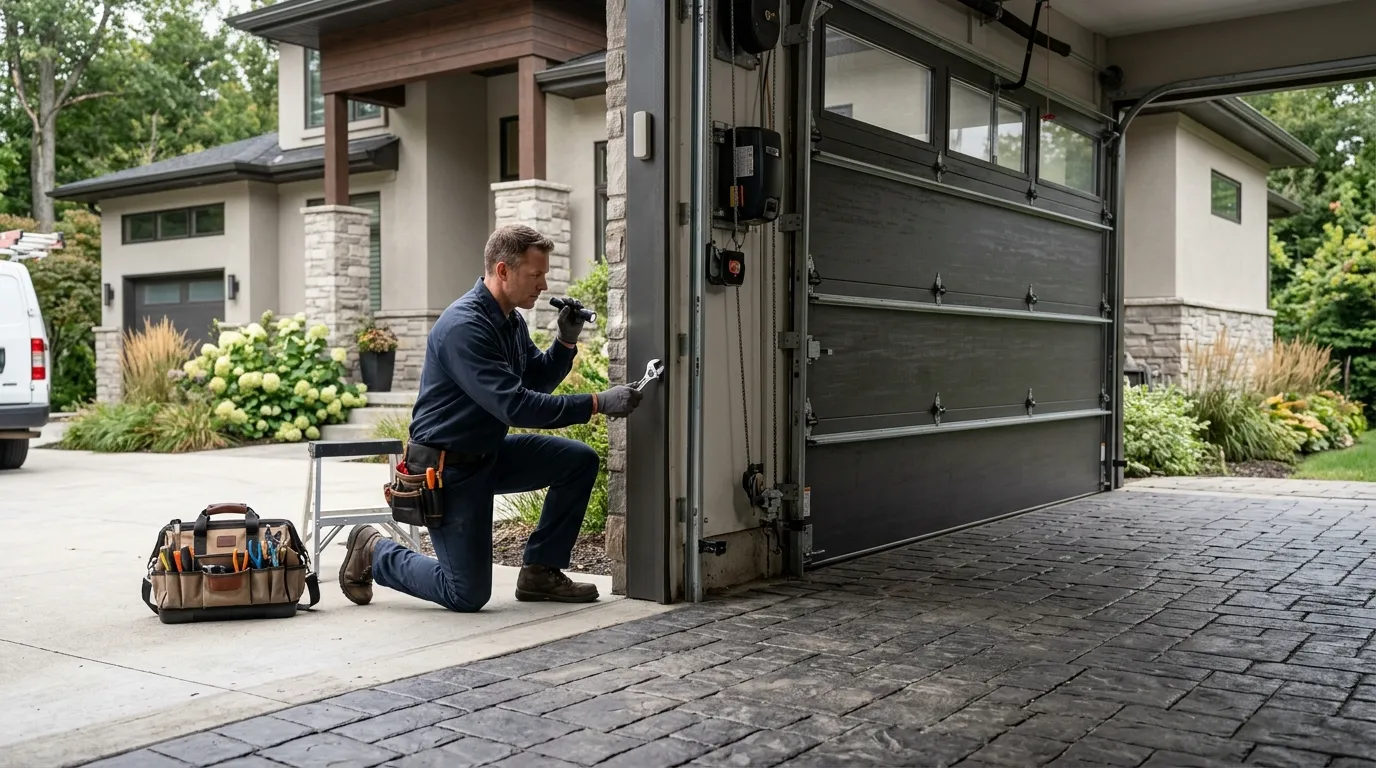
Sensor misalignment is faster to fix once found: loosen the bracket, re-aim, tighten, test. Where it gets slower is when moisture or corrosion has gotten into the sensor wiring itself, which we do see on newer opener installs where the low-voltage wire runs along the floor and picks up damage over the years. We don't promise a fixed number of minutes on-site, because a board swap and a wiring repair aren't the same job, but we do the diagnosis before we quote either one.
What Is on the Truck
Because most Star Valley openers are 2000-era chain or belt-drive units, not the older screw-drive style, the truck carries circuit boards and photo-eye sensor kits sized to that generation of hardware, along with standard remotes and keypads that pair to boards from that period. We also carry the low-voltage sensor wire itself, since replacing a corroded run is often the actual fix rather than the sensor.
What we don't carry is a board for every opener ever made. If a home has an opener the manufacturer no longer supports, or a proprietary board with a part number that's gone obsolete, we'll tell you that on the spot rather than order a part that may take weeks to source. In that case, full opener replacement is usually the honest answer, and we'll say so instead of stringing along a repair on a board nobody stocks anymore.
What You Pay
We don't post a flat price for opener repair here, because the fix depends entirely on what's actually wrong - a sensor realignment costs nothing like a board replacement, and a full opener swap is its own conversation. What we can tell you is that we diagnose first and quote the specific part, not a guess.
Star Valley's median household income sits at $66,075, a bit above the wider Payson-area figure, which is worth mentioning only because it's sometimes the reason a homeowner here opts to replace an aging opener outright rather than chase parts for a board that's near the end of its run. That's a judgment call we'll walk through with you, not a decision we make for you.
Why This Fails Locally
The region sits in a cold-moderate climate band, and Star Valley gets the same winter mornings Payson does - cold enough that condensation forms on a garage's low-voltage sensor wiring and on the photo-eye lenses themselves. On an older screw-drive door with no sensors, that's a non-issue. On the newer, 2000-era openers standard in Star Valley, it's exactly where the fault shows up first: a sensor reads a false obstruction from fogged glass, or the board misreads a signal after a cold, damp night.
Sitting six miles out from Payson, Star Valley doesn't have its own dedicated depot - the truck comes from Payson - so a same-day board swap depends on what's already on board rather than a special trip for one part. That's a real limitation, and it's why we carry a broader stock of 2000-era boards and sensors on the truck than we would if this whole service area still ran on older, sensor-less hardware.